
Scientists are pursuing the limits of longevity
Scientists are pursuing the limits of longevity

Our understanding of consciousness could be fundamentally wrong
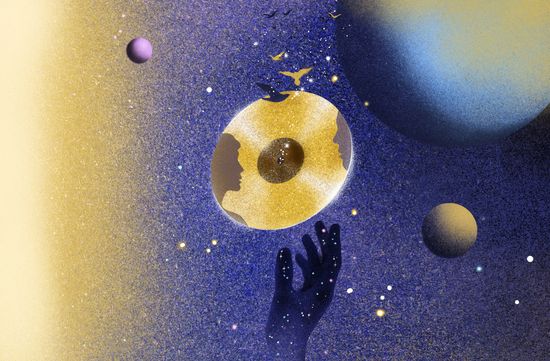
Science in meter and verse

A search for the most complex elliptic curves has taken mathematicians years. Claude beat the record in days

After months of headaches and visual hallucinations, a woman was finally revealed to have brain cysts filled with tapeworm larvae

More than 100,000 people in the country are over 100 years old

And how they might have helped save the future of American apples

The case for not filling up every minute of your day

The pages come from a copy of Mirror of the Blessed Life of Jesus Christ that once belonged to John Gage, an enforcer in Henry VIII’s court and a key figure in the historical dissolution of the monasteries
Physicists are searching for what lies underneath the particles we know
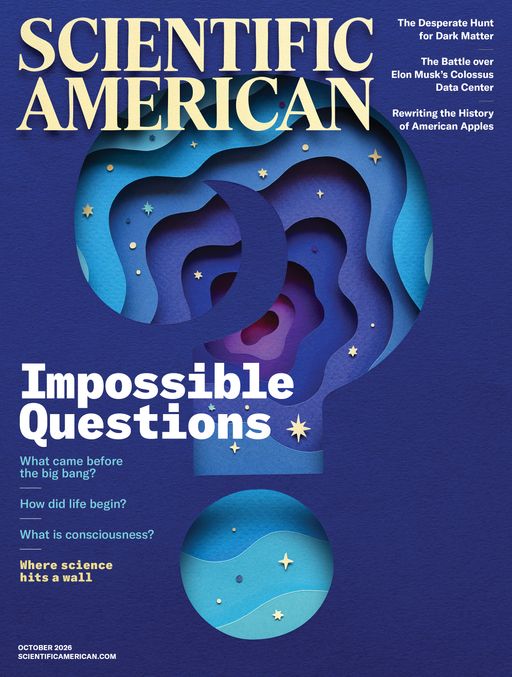
Some of the biggest questions in science—about the origins of space, life and consciousness—aren't just unanswered. They may be unanswerable. That doesn't stop scientists from trying.
Elsewhere in the issue: The Desperate Hunt for Dark Matter | The Battle over Elon Musk's Colossus Data Center | Rewriting the History of American Apples

A new declaration from winners of the Fields Medal reflects many mathematicians’ growing alarm over a “severe misalignment” between the tech industry and their field a week after AI toppled one of math’s biggest open problems

Both the president and Secretary of Health and Human Services Robert F. Kennedy, Jr., have made numerous false claims about the vaccines’ efficacy and safety

After an OpenAI model presented a possible solution to the Navier-Stokes problem, mathematicians are speculating about which major unsolved question could be resolved next
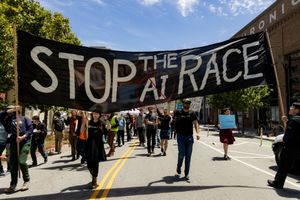
An Anthropic researcher quit over fears of runaway AI. His colleague who still works there agreed. Security experts argue that the incidents that are already on record call for tighter oversight, not panic
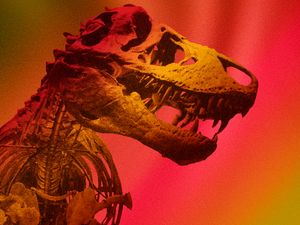
The dinosaurs were once considered reptilian, but the new results suggest we may need to rethink their evolution

A high-ranking official announced yesterday that the U.S. military has deployed weapons into orbit to counter threats from Russia and China

What happens when machines surpass the most brilliant human minds? Mathematicians are finding out
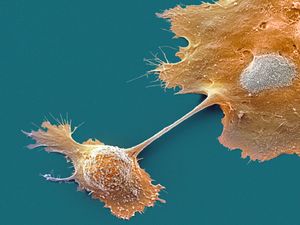
Pancreatic cancer is typically caught in its latest stages, when it is hardest to treat

Could the hunt for the universe’s missing matter be the biggest wild goose chase in scientific history?
“Much as many of us may not like the notion that wealthy collectors can buy prized fossil specimens, as Dr. Kamat points out, there is at present no legal restriction for doing so. What should happen is that UNESCO or other world organizations should regulate such deals through international consent. That is unlikely to happen quickly nor universally given present…”
— Klaus R
Rachel Feltman joins Vox’s Unexplainable to discuss the enduring mysteries that continue to challenge science
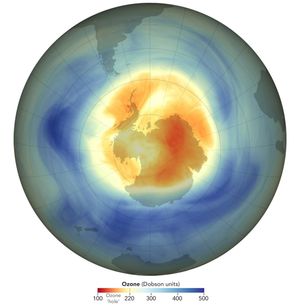
Climate change, driven by humans, is making extreme weather more commonplace

The latest gravitational-wave discoveries include record-breaking cataclysms

Amid renewed calls to slow frontier AI, experts are considering what an emergency stop would entail—and who would decide when to use it
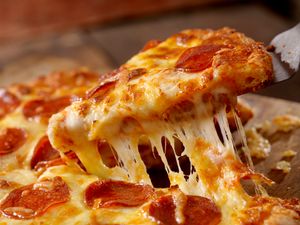
Moser’s circle problem can be used to divide a pizza into one, two, four, eight, 16 or 31 slices. It’s a perfect example of how the numbers in a sequence aren’t as clear-cut as they may first appear

After decades of hype, directed-energy weapons may offer the U.S. military a cheaper answer to the expensive problem of stopping drones

Experts say free lunch for every child improves academic performance. Whether it does is murky, according to a Scientific American analysis, but there are definite financial and social benefits
Hang a painting poorly in this math puzzle
Scientists disagree on how biology got started and on whether we can ever know for sure
The biggest questions in science inspire us even when we lack answers
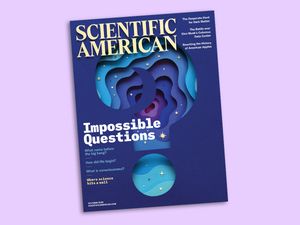
Some questions may never be answered, but maybe that’s not the point

As new 9/11 documents emerge, AI transforms math and fuels debates over pollution, power and progress
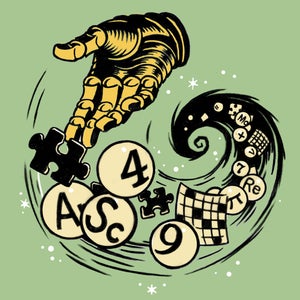
Play this crossword inspired by the October 2026 issue of Scientific American

The Atlantic Ocean has never seen a year without a hurricane since reliable records began

A quarter of a century after the Twin Towers fell, those who lived through the attacks are still seeking care for myriad illnesses, including cancers, post-traumatic stress disorder, and more

Will some of the biggest mysteries in science remain forever unsolved?

Deep-orange yolks could have a slight health benefit, but it’s easy for producers to fake it
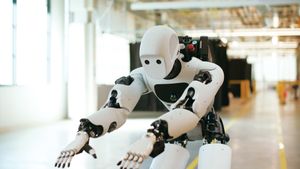
The company’s push into physical AI is putting Gemini inside humanoids—and testing whether its intelligence can survive in the real world