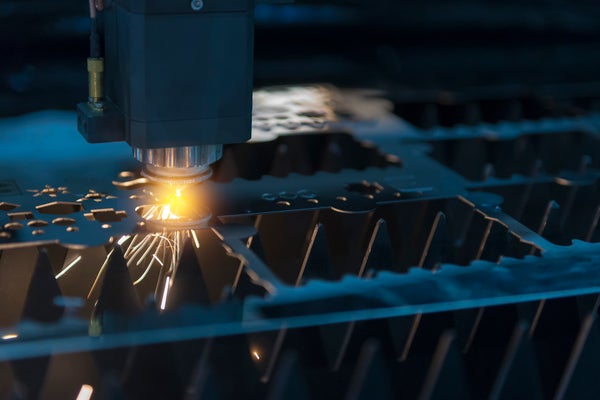
The 2018 Nobel Prize in physics was awarded to three physicists, Arthur Ashkin, Gerard Mourou, and Donna Strickland, for their innovative work to develop techniques that make lasers more widely applicable in everything from medicine to manufacturing.
Half of the prize is being shared by Mourou and Strickland for their invention of what is known as "chirped pulse amplification" (or CPA for short), a technique they developed together in the 1980s. Strickland was a graduate student at the University of Rochester at the time of this incredibly important work: CPA was the basis of her dissertation and their discovery was presented in her first ever scientific publication. Strickland became an inspiration in 2018 as only the third woman to ever be awarded the physics prize in the Nobel’s 117-year history after Marie Curie in 1911 and Maria Goeppert-Mayer in 1963.
On supporting science journalism
If you're enjoying this article, consider supporting our award-winning journalism by subscribing. By purchasing a subscription you are helping to ensure the future of impactful stories about the discoveries and ideas shaping our world today.
If you enjoyed this article, I’d like to ask for your support. Scientific American has served as an advocate for science and industry for 180 years, and right now may be the most critical moment in that two-century history.
I’ve been a Scientific American subscriber since I was 12 years old, and it helped shape the way I look at the world. SciAm always educates and delights me, and inspires a sense of awe for our vast, beautiful universe. I hope it does that for you, too.
If you subscribe to Scientific American, you help ensure that our coverage is centered on meaningful research and discovery; that we have the resources to report on the decisions that threaten labs across the U.S.; and that we support both budding and working scientists at a time when the value of science itself too often goes unrecognized.