
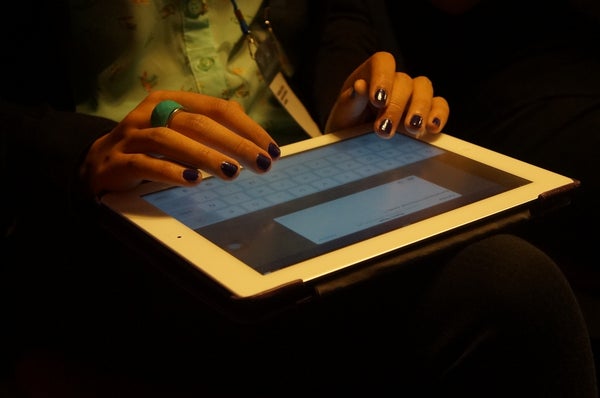
As you might guess, scientists do not have a complete answer to this question, and the partial answer is complicated. The advantages offered by tablets or, more generally, electronic textbooks seem legion: they are portable; publishers can easily update the content; students can get immediate feedback; and the text can be supplemented with videos and audio—imagine not just reading about the Battle of Britain but seeing a newsreel as well.
Unfortunately, there are downsides, too. Sometimes this technology fails, leaving teachers to scramble for a backup plan. Some students do not have access to tablets outside of school. Disadvantaged students may not have Internet connectivity at home. And most problematic, studies show that kids typically understand less and take longer when they are reading from electronic textbooks as compared with printed materials.
This difference in comprehension and reading time is not huge, but it is pretty consistent, which probably explains why most students say they dislike electronic textbooks. Even students experienced in using digital technologies prefer paper.
On supporting science journalism
If you're enjoying this article, consider supporting our award-winning journalism by subscribing. By purchasing a subscription you are helping to ensure the future of impactful stories about the discoveries and ideas shaping our world today.
What is going on? For starters, the cool features of electronic textbooks—if they are not carefully implemented—do not guarantee a better grasp of the material. For instance, an educational video that distracts from, rather than complements, the text will actually hurt comprehension.
Also, the look and feel of an e-book matter. Despite ongoing advances in technology, users still experience more eye fatigue when they read from a screen. We also know that readers tend to understand better when they flip virtual pages; comprehension declines if they scroll, perhaps because flowing text can disrupt visual attention, and they more often lose their place.
Companies are working to make electronic pages look more like paper, although they are still figuring out which design features are critical to improving a user's experience.
Theoretically, if the main problem is design-based, it should affect our grasp of anything we peruse on a screen. Research suggests, however, that the impact of e-readers on comprehension is smaller when we read for pleasure. It is easy to see why it may be less perceptible for recreational reading. Most people read light fiction and nonfiction for enjoyment, so a small hit to our understanding is no big deal (even though you would likely follow the latest John Grisham thriller better on paper). Textbooks, however, serve up more challenging material, on which students know they will be tested. As a result, they are careful to observe how well they grasp what they are reading.
Software and hardware companies are trying to overcome these learning issues, but for the time being, the word on e-readers at school should be: “Proceed with caution.”
Question submitted by Galina Ivanova
Do you have a question about the brain you would like an expert to answer? Send it to MindEditors@sciam.com