
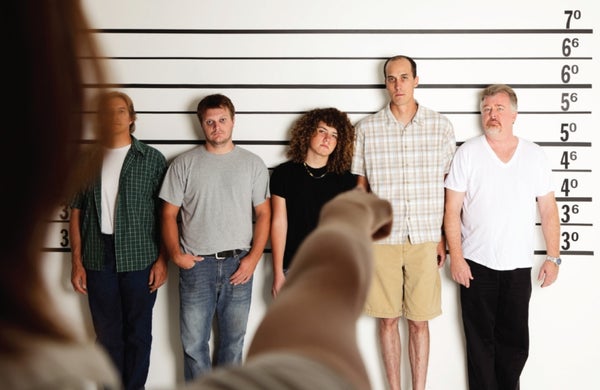
DNA tests have made it clear that many innocent people have been sent to prison after a witness picked them out of a lineup. Between 1989 and 2016, more than 70 percent of the 337 wrongful convictions identified in the U.S. had been influenced by misidentification from eyewitnesses, according to the Innocence Project. Researchers recently reported, however, that a simple procedure could help reduce the risk of misidentification: ask the eyewitnesses about their confidence level whenthey pick someone from a lineup.
The new work, published online last December in PNAS, also investigated a long-standing debate over how to perform a lineup. Numerous studies during the past few decades have examined how to minimize the possibility that witnesses will finger an innocent person, and they have settled on showing people the photographs one by one, instead of all together. About 30 percent of the police departments in the U.S. have adopted this sequential method.
Yet some of the studies used to support that approach overlooked the important question of how sure a witness felt about his or her selection. In the current study, the researchers examined real lineups administered by the Robbery Division of the Houston Police Department to see how the different procedures compared when witness confidence was taken into account. The lineups, of which 187 were simultaneous and 161 sequential, were cases in which the suspect was a stranger to the witness, and they were administered by people who themselves were unaware of the suspect's identity. Witnesses rated their confidence as low, medium or high.
On supporting science journalism
If you're enjoying this article, consider supporting our award-winning journalism by subscribing. By purchasing a subscription you are helping to ensure the future of impactful stories about the discoveries and ideas shaping our world today.
In a third of the cases, the witnesses did not identify anyone. In another third, they identified the suspect, and in the remaining cases, they chose someone who was not suspected, or a “filler.” Confidence turned out to be key: most high-confidence identifications were of the suspect, whereas most low-confidence IDs were of fillers. “Ignoring low confidence in the beginning is a grave error,” says lead researcher John Wixted of the University of California, San Diego. “The witness is telling you that there's a good chance they're making a mistake.”
Comparing the results of the two different lineup techniques, the researchers found that the simultaneous method produced more confident identifications, leading to the conclusion that it may be more useful than the sequential approach.
The difference between the two methods, however, is statistically very slight, notes Gary Wells, a professor of psychology at Iowa State University who studies eyewitness memory: “The more important part of this article is that witness confidence did a good job of helping sort between accurate and mistaken witnesses.”
What matters most for police departments is that they ask the witness about their confidence on the spot and ensure the lineup is double-blind, meaning neither the witness nor the administrator of the lineup has been tipped off as to who is the suspect. Fewer than half of U.S. police departments use a double-blind procedure, Wells says.
The idea that initial confidence is the best measure, rather than the oft-used level of confidence at trial, has not yet made it beyond the realm of research. Wixted hopes his findings will influence how lineups are handled by the police, but, he says, “the word has not gotten out.”