

By Julie Steenhuysen
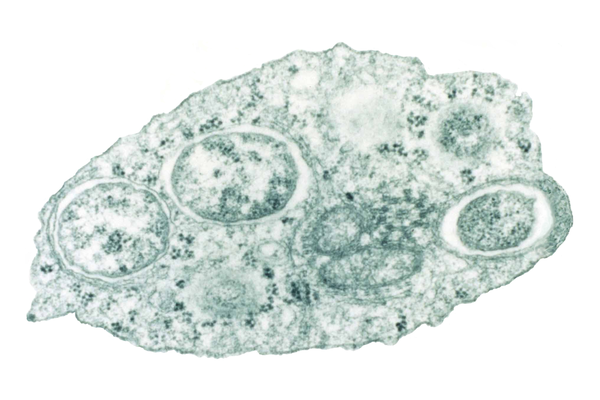
Infecting mosquitoes with a strain of bacteria known as Wolbachia significantly reduced their ability to transmit the Zika virus, Brazilian researchers said on Wednesday, raising hope for this biological method of blocking transmission of the deadly virus.
The bacteria has been released in several countries including Australia, Brazil, Indonesia and Vietnam as part of strategies to control dengue, and the new finding shows the method also works with Zika, a close relative of dengue.
On supporting science journalism
If you're enjoying this article, consider supporting our award-winning journalism by subscribing. By purchasing a subscription you are helping to ensure the future of impactful stories about the discoveries and ideas shaping our world today.
Zika has been linked with the birth defect microcephaly that has been sweeping through South and Central America and the Caribbean and making its way north to the United States.
In February the World Health Organization declared Zika a global health emergency. The connection between Zika and microcephaly came to light last fall in Brazil, which has now confirmed more than 1,100 cases of microcephaly that it considers to be related to Zika infections in the mothers.
The new study, by researchers at Brazil's Oswaldo Cruz Foundation and published in Cell Host & Microbe, takes advantage of the naturally occurring strain of bacteria known as Wolbachia, which live in insect cells and are found in 60 percent of common insects. The method involves inserting the bacteria into mosquito eggs, which then pass the bacteria along to their offspring.
"The idea has been to release Aedes mosquitoes with Wolbachia over a period of a few months, so they mate with Aedes mosquitoes ... and over time, replace the mosquito population," said senior author Luciano Moreira of the Oswaldo Cruz Foundation in Rio de Janerio, which is preparing to host the Olympics this summer.
Moreira is part of Eliminate Dengue, a non-profit that is testing the approach in 40 locations around the world.
In the Zika study, the team infected field mosquitoes and Wolbachia-infected mosquitoes with two strains of Zika currently circulating in Brazil.
After two weeks, mosquitoes carrying Wolbachia had fewer particles of the virus in their bodies and saliva - making them less able to infect humans with the virus.
"Wolbachia showed to be as effective on Zika as the most important dengue experiments we did," Moreira said.
Dr. Jason Rasgon, an entomologist at Penn State University, said in some prior experiments Wolbachia has been shown to suppress transmission of one pathogen but enhance transmission of another. The new finding removes that concern.
Moreira cautioned that the strategy is not 100 percent effective and will not eliminate the virus, saying it should be used as part of an integrated control strategy.