
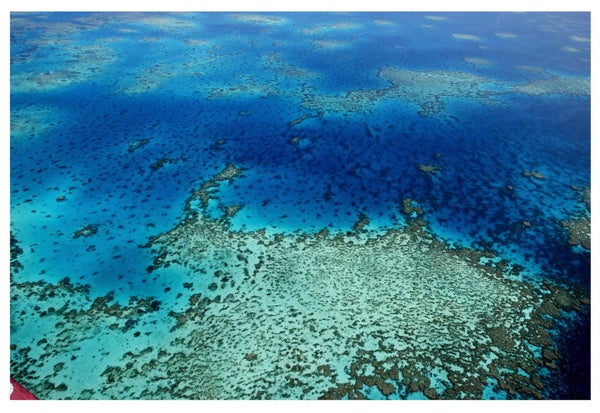
We knew coral bleaching was a serious issue in the Great Barrier Reef, but the scope of just how widespread it was has been unclear—until now.
Extensive aerial surveys and dives have revealed that 93 percent of the world’s largest reef has been devastated by coral bleaching. The culprit has been record-warm water driven by El Niño and climate change that has cooked the life out of corals.
The unprecedented destruction brought leading reef scientist Terry Hughes, who runs the ARC Center of Excellence for Coral Reef Studies, to tears.
On supporting science journalism
If you're enjoying this article, consider supporting our award-winning journalism by subscribing. By purchasing a subscription you are helping to ensure the future of impactful stories about the discoveries and ideas shaping our world today.
“We’ve never seen anything like this scale of bleaching before. In the northern Great Barrier Reef, it’s like 10 cyclones have come ashore all at once,” Hughes said in a press release.
The Center conducted aerial surveys and dives at 911 sites spanning the full 1,430-mile length of the reef. They show the hardest hit areas are in the northern part of the reefs, which have also endured some of the hottest water temperatures for prolonged periods.
More than 80 percent of reefs surveyed there showed signs of severe bleaching. The southern end of the reef fared better, but overall the bleaching represents a massive blow to biodiversity at the UNESCO World Heritage Site.
The Great Barrier Reef also faces pressure from ocean acidification and fishing impacts, ramping up concerns over how to protect one of the most unique ecosystems on the planet.
I showed the results of aerial surveys of #bleaching on the #GreatBarrierReef to my students, And then we wept. pic.twitter.com/bry5cMmzdn
— Terry Hughes (@ProfTerryHughes) April 19, 2016
Beyond its beauty, the Great Barrier Reef also has a huge economic benefit on the Australian economy. It generates $4.45 billion in tourism revenue annually and supports nearly 70,000 jobs, according to the Great Barrier Reef Marine Park Authority.
The damage caused by this round of bleaching will be felt for decades, but it’s not the only reef around the globe to feel the heat of climate change. 2015 marked the third global coral bleaching event ever recorded. This one been thelongest of the three as hot ocean temperatures fueled by El Niño and climate change have caused reefs to suffer across every ocean basin.
While every basin has been hit, some reefs and coral species have survived through the event. That has scientists trying to quickly understand why the survivors made it through. That knowledge could be crucial to ensure reefs continue to survive as oceans temperatures continue their inexorable rise and water becomes more acidic due to climate change.
“We can’t afford to sit by and watch climate change drive all the world’s coral reefs to extinctions by the end of the century,” Julia Baum, a reef researcher at the University of Victoria, said.
This article is reproduced with permission from Climate Central. The article was first published on April 20, 2016.