Book Review: Beneath the Surface
Books and recommendations from Scientific American
On supporting science journalism
If you're enjoying this article, consider supporting our award-winning journalism by subscribing. By purchasing a subscription you are helping to ensure the future of impactful stories about the discoveries and ideas shaping our world today.
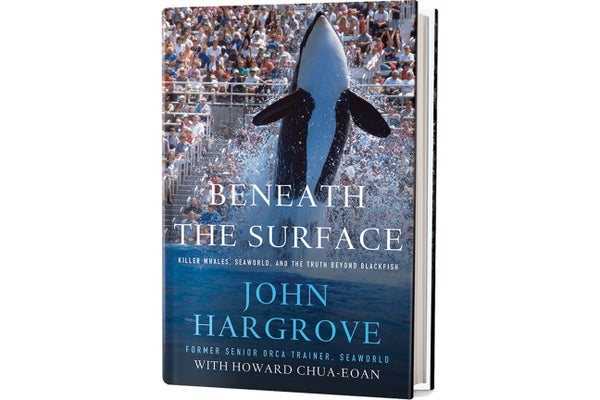
Beneath the Surface: Killer Whales, SeaWorld, and the Truth Beyond
by John Hargrove , with Howard Chua-Eoan
Palgrave Macmillan*, 2015 ($26)
Since his first visit to SeaWorld as a young boy, Hargrove dreamed of working with orcas. Eventually he got his wish and became a senior trainer there, caring for killer whales over 14 years. As Hargrove's love for and knowledge of the creatures increased, however, he gradually concluded that the work he was part of at SeaWorld was harming them and was unacceptably dangerous to himself and the other human trainers. Orcas are too big and too intelligent to be kept in captivity, Hargrove argues, and he came to see the daily “Shamu Stadium” shows where the whales perform tricks as “part of a rapacious corporate scheme that exploited both the orcas and their human trainers.” He resigned from SeaWorld in 2012 and appeared in the documentary Blackfish, which criticized the park's practices after its trainer Dawn Brancheau was killed by a whale in 2010. Here Hargrove covers both the joy of his own experiences with orcas as well as the case for why such interactions in captivity should end.
MORE TO EXPLORE
For more recommendations, go to ScientificAmerican.com/mar2015/recommended
Subscribe to Support Independent Journalism
Great science journalism requires human expertise, time, effort and creativity. And it costs money. That’s why I and the journalists here at Scientific American hope you’ll join our community.
When you subscribe, you are supporting staff and freelance journalists who are passionate about telling science stories that are true, important and compelling. Our editors and reporters are often experts in their fields, which means they understand the nuances of big discoveries and can untangle the breakthroughs from the hype. With a subscription, you are also supporting rigorous fact-checking to ensure the words we publish are precise and accurate. And you’re supporting original illustrations, graphics and photos that bring you closer to an advanced laboratory, an ice sheet in Antarctica or a space mission in orbit. You’re helping us craft other types of high-quality journalism as well: Our newsletters are carefully written, edited and curated by staffers you have or will come to know and love. Our Science Quickly podcast is based on original reporting, collaboration with editors and scientists and exacting production.
Subscriptions keep this engine running so we can continue to deliver thoughtful, rigorous and independent science journalism to you. In an era of viral misinformation, this work is crucial. If you value what we do, I hope you’ll consider joining us as a subscriber