If you're enjoying this article, consider supporting our award-winning journalism by subscribing. By purchasing a subscription you are helping to ensure the future of impactful stories about the discoveries and ideas shaping our world today.
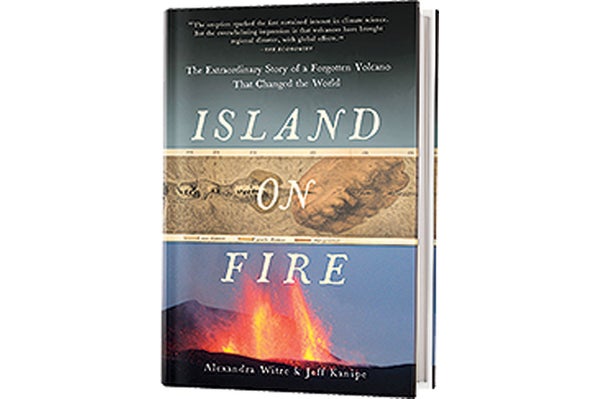
Island on Fire: The Extraordinary Story of a Forgotten Volcano That Changed the World by Alexandra Witze and Jeff Kanipe Pegasus Books, 2015 (($26.95))
In 1783 the Icelandic volcano Laki erupted, with catastrophic consequences. The ash it pumped into the atmosphere blanketed most of the Northern Hemisphere in a sun-blocking fog, causing one of the most severe winters for hundreds of years. Many across Europe froze to death, and crops withered, leading to mass famine. In Africa, the monsoons failed to come, and the Nile did not flood as usual, causing one sixth of Egypt's population to starve or leave the country. The official death tally in Iceland from Laki was around 9,000, but some experts suggest the global toll was much higher. Journalists Witze and Kanipe tell the scientific and human story of Laki and predict that because a Laki-scale eruption happens on average every 200 to 500 years in Iceland, a similar event is not unlikely.
It’s Time to Stand Up for Science
If you enjoyed this article, I’d like to ask for your support. Scientific American has served as an advocate for science and industry for 180 years, and right now may be the most critical moment in that two-century history.
I’ve been a Scientific American subscriber since I was 12 years old, and it helped shape the way I look at the world. SciAm always educates and delights me, and inspires a sense of awe for our vast, beautiful universe. I hope it does that for you, too.
If you subscribe to Scientific American, you help ensure that our coverage is centered on meaningful research and discovery; that we have the resources to report on the decisions that threaten labs across the U.S.; and that we support both budding and working scientists at a time when the value of science itself too often goes unrecognized.