
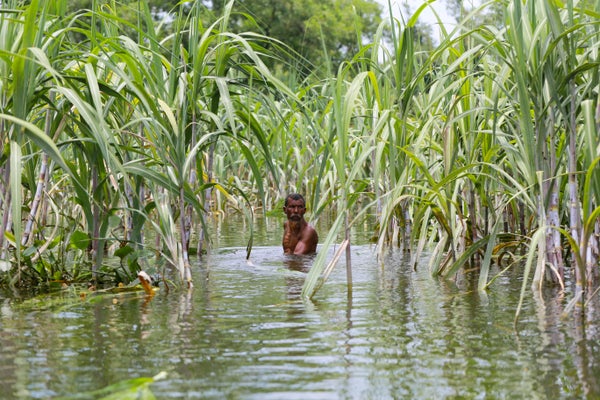
A total of 54 million people worldwide faced weather-related disasters this year while dealing with effects of the coronavirus pandemic, according to a report released yesterday by the International Federation of Red Cross and Red Crescent Societies.
The report by one of the world’s largest relief organizations highlights the “double threat” of climate change and the pandemic, particularly on impoverished nations such as Bangladesh and India.
“Our analysis points to the strong overlaps between various risks the world is facing,” the federation wrote in its 21-page report. “We cannot deal with the pandemic and its economic impacts in isolation from the climate crisis and wider development objectives such as poverty reduction.”
On supporting science journalism
If you're enjoying this article, consider supporting our award-winning journalism by subscribing. By purchasing a subscription you are helping to ensure the future of impactful stories about the discoveries and ideas shaping our world today.
In addition to people being hit by flooding, drought, storms and wildfires, another 432 million people around the world were exposed to extreme heat during the pandemic, according to the federation, which has for years urged action on climate change.
“Millions of people are suffering from the two crises colliding,” federation President Francesco Rocca said yesterday, urging world leaders to use economic recovery funds to address climate change.
“We have a rare opportunity to make a real difference to the climate crisis,” Rocca said, referring to spending aimed at rebuilding from the pandemic. “Make sure these investments are green and resilient.”
The federation report analyzed the 132 weather-related disasters in 2020—most of them floods—and found that 92 overlapped with the pandemic. That happened when a disaster occurred after March 11, when the World Health Organization declared the COVID-19 outbreak a pandemic, or if it occurred prior to that date in a country or U.S. state that had been hit by the pandemic.
The biggest dual impact has been in Bangladesh and India, where nearly 40 million people were affected this year by the pandemic and flooding or storms such as Cyclone Amphan, which killed 129 people in May.
In East Africa, some countries faced a “triple threat” of COVID-19, locusts and flooding, which has left thousands of people homeless and many in shelters “where it’s not possible to observe distancing,” Rocca said.
In the United States, the biggest overlap between the pandemic and weather-related disasters is tied to the Western wildfires that have burned roughly 7 million acres and forced mass evacuations. The federation said the wildfires affected 2.3 million people in the United States.
“Decisions on the economic recovery will determine whether we can be optimistic about our future,” Rocca said. “Bold and urgent climate action cannot wait.”
Reprinted from Climatewire with permission from E&E News. E&E provides daily coverage of essential energy and environmental news atwww.eenews.net.