
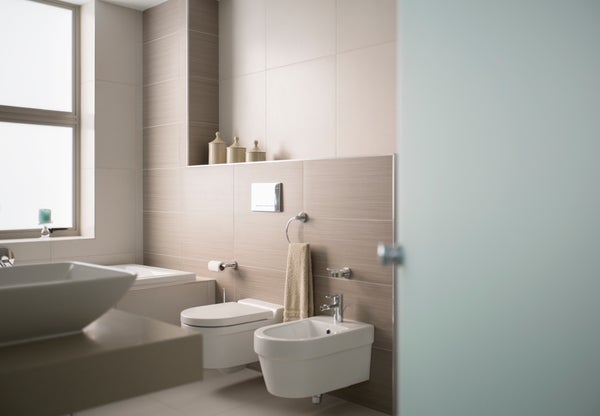
Dear EarthTalk: Wouldn't a return to installing bidets in bathrooms at home go a long way toward cutting disposable tissue use and saving forests? —Peter K., Albany, Ga.
Besides being more sanitary than toilet tissue, bidets—those squirty accessories so popular in Europe, Japan and elsewhere that clean your underside using a jet of water—are also much less stressful on the environment than using paper.
Justin Thomas, editor of the website metaefficient.com, considers bidets to be “a key green technology” because they eliminate the use of toilet paper. According to his analysis, Americans use 36.5 billion rolls of toilet paper every year, representing the pulping of some 15 million trees. Says Thomas: “This also involves 473,587,500,000 gallons of water to produce the paper and 253,000 tons of chlorine for bleaching.” He adds that manufacturing requires about 17.3 terawatts of electricity annually and that significant amounts of energy and materials are used in packaging and in transportation to retail outlets.
To those who say that bidets waste water, advocates counter that the amount is trivial compared to how much water we use to produce toilet paper in the first place. Biolife Technologies, manufacturer of the high-end line of Coco bidets, says the amount of water used by a typical bidet is about 1/8th of a gallon, with the average toilet using about four gallons per flush. Lloyd Alter of the website treehugger.com reports that making a single roll of toilet paper requires 37 gallons of water, 1.3 kilowatt/hours (KWh) of electricity and some 1.5 pounds of wood. Thomas points out that toilet paper is also a public nuisance in that it clogs pipes and adds a significant load onto city sewer systems and water treatment plants.
“Basically, the huge industry of producing toilet paper could be eliminated through the use of bidets,” offers Thomas, who has been testing different toilet-seat mounted units for the past two years. He would like to someday pair a bidet with a composting sawdust toilet for the ultimate green bathroom experience.
Once reserved for Europeans, bidets are now popular all over the world—except in North America. Thomas reports that 60 percent of Japanese households today have high-tech bidets made by Toto called Washlets, while some 90 percent of Venezuelan homes have bidets. Most people use a small amount of paper to dry their posteriors after the bidet has done its job, but more expensive air-drying models dispense with the need for paper altogether. Thomas adds that bidets provide important health benefits such as increased cleanliness and “the therapeutic effect of water on damaged skin (think rashes or hemorrhoids).”
On the public health front, bidet maker BioRelief reports that almost 80 percent of all infectious diseases are passed on by human contact and that only about half of us actually wash our hands after using the facilities—making hands-free bidets a safer alternative all around. “If you don’t have to use your hands at all then there is less chance of passing or coming in contact with a virus,” claims the company. BioRelief’s full featured BidetSpa sells for $549, but Lloyd Alter reports that consumers willing to go without heated water and air-drying mechanisms can get a perfectly adequate one they can install themselves for less than $100, such as the Blue Bidet, which retails for just $69.
CONTACTS: MetaEfficient, www.metaefficient.com; Treehugger, www.treehugger.com; Biolife Technologies, www.biolifetechnologies.com; Toto, www.totousa.com; Blue Bidet, www.bluebidet.com.
On supporting science journalism
If you're enjoying this article, consider supporting our award-winning journalism by subscribing. By purchasing a subscription you are helping to ensure the future of impactful stories about the discoveries and ideas shaping our world today.
EarthTalk is produced by E/The Environmental Magazine. SEND YOUR ENVIRONMENTAL QUESTIONS TO: EarthTalk, P.O. Box 5098, Westport, CT 06881; earthtalk@emagazine.com. Read past columns at: www.emagazine.com/earthtalk/archives.php. EarthTalk is now a book! Details and order information at: www.emagazine.com/earthtalkbook.