
A technique that allows particular genes to spread rapidly through populations is not ready to be set loose in the wild, warns a committee convened by the US National Academies of Sciences, Engineering, and Medicine.
In a report released on June 8, the committee argued that such ‘gene drives’ pose complex ecological risks that are not yet fully understood. “It is not ready—and we are not ready—for any kind of release,” says Elizabeth Heitman, co-chair of the committee and a research integrity educator at Vanderbilt University School of Medicine in Nashville, Tennessee. “There is a lot of work that needs to be done.”
Even so, Heitman and other members of the committee felt that the potential of gene drives, for example to combat insect-borne diseases, is compelling enough to warrant additional laboratory and field studies.
On supporting science journalism
If you're enjoying this article, consider supporting our award-winning journalism by subscribing. By purchasing a subscription you are helping to ensure the future of impactful stories about the discoveries and ideas shaping our world today.
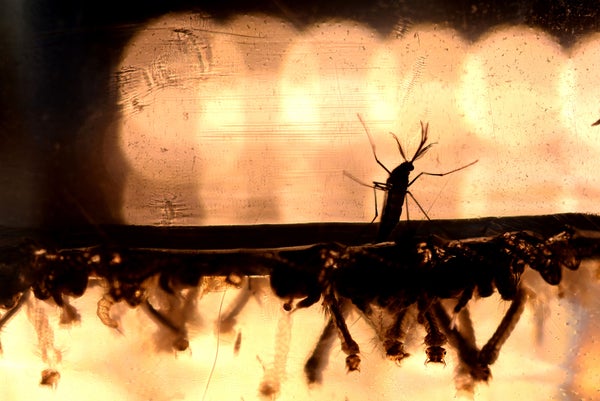
Gene drives have been studied for more than half a century, and have long been postulated as a way to eradicate mosquito-borne diseases such as malaria. But the field was hampered by technical challenges until the recent advent of sophisticated—and easy-to-use—tools for engineering genomes. In the past two years, researchers have used a popular gene-editing technique called CRISPR–Cas9 to develop gene drives that spread a given gene through a population almost exponentially faster than normal in yeast, fruit flies and two species of mosquitoes.
But as molecular biology research on gene drives has surged forward, it has outpaced our understanding of their ecological consequences, says Heitman. Even a small, accidental release from a laboratory holds the potential to spread around the globe: “After release into the environment, a gene drive knows no political boundaries,” the committee wrote.
As a result, oversight of gene drive projects should be coordinated across countries, the committee argued, and best practices should be openly shared among laboratories. The committee also detailed multiple phases of testing that should be used to assess the effects of a gene drive, and stressed the need to involve researchers' home institutions, regulators and even the public in decision-making.
It is a good overall strategy, says Todd Kuiken, who studies science policy at the Wilson International Center for Scholars, a think tank in Washington DC. But the committee missed an opportunity to set out the infrastructure and safety measures that would be needed to conduct field trials of gene drives, he adds. “They don’t talk about how you would actually do this and where the money is going to come from.”
A gene drive could have unintended effects on the environment if it is unleashed in wild populations: removing one species of insect, for example, could endanger the animals that feed on it. Given this risk, the report also stressed the importance of layering multiple methods of containment to prevent accidental release of engineered species, and of consulting with the public even before gene drive experiments are undertaken in the laboratory. It’s a message that evolutionary engineer Kevin Esvelt worries may not come through strongly enough to individual researchers.
“If you were to accept that there is a risk that building it in the laboratory could lead to its release, then that demands that you tell the world what you’re doing before you do the experiments,” says Esvelt, who works at the Massachusetts Institute of Technology in Cambridge.
Heitman notes that researchers lack tried and tested ways of soliciting input from the public at large about their work. For Esvelt, the bigger barrier is a scientific culture that often discourages researchers from sharing their experiments before they are published, for fear of being beaten to the finishing line by another group. “No one would rationally design the current scientific enterprise,” he says. “And right now it’s easier to engineer biology than culture.”
This article is reproduced with permission and was first published on June 8, 2016.