
Spanish health authorities said on Thursday they were investigating a possible outbreak of Crimean-Congo hemorrhagic fever (CCHF) which has killed one man and infected a nurse, in the first non-imported case reported in Western Europe.
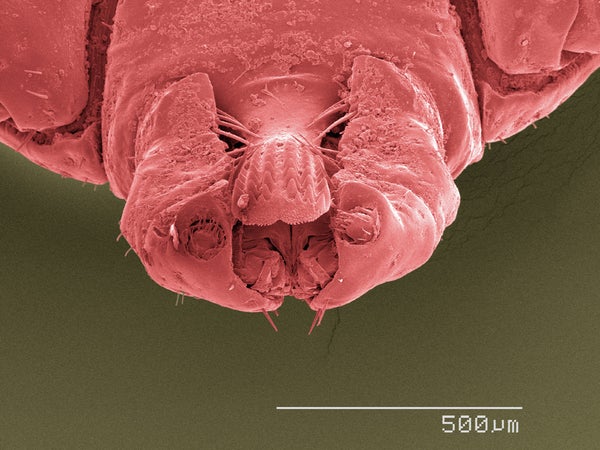
The 62-year-old man died on Aug. 25 after contracting the CCHF disease during a walk in the Castilla-Leon region, probably from a tick bite he reported - which is one of the main ways it is transmitted - authorities said in a statement.
He also infected the nurse who treated him at a hospital in Madrid and she is now in a stable condition in quarantine at an isolation unit, they said. Authorities are monitoring about 200 other people who had come into contact with the man and nurse.
On supporting science journalism
If you're enjoying this article, consider supporting our award-winning journalism by subscribing. By purchasing a subscription you are helping to ensure the future of impactful stories about the discoveries and ideas shaping our world today.
According to the World Health Organization, CCHF's mortality rate is about 30 percent and it is endemic to Africa, the Balkans and Ukraine, the Middle East and Central Asia.
"The case detected in Madrid would be the first in Western Europe with an autochthonous character, so not imported from another geographic area," Madrid's health authority said in the statement.
Authorities in Germany registered a case recently but it was imported from another country outside Western Europe, it said.
People mainly contract the CCHF virus from infected ticks or contact with infected animal blood and tissue, the WHO says, with death normally occurring in the illness's second week. There are no vaccines available to immunize animals.
Human-to-human transmission can result from close contact with the blood or other bodily fluids of an infected person, the WHO says, and health workers are especially vulnerable.
CCHF was first recognized in the Crimea in 1944 and then in the Congo in 1969, the U.S Centre for Disease Control (CDC) says. In 2011, it was detected for the first time in ticks in Spain, but the man's death is the first case of an infection.
(Reporting by Rodrigo Miguel; Writing by Angus Berwick; Editing by Sonya Dowsett and Dominic Evans)