
Scientists talk about the iron hypothesis, which means that if someone dumps iron into the global oceans at its most desolate zones, the world could enter a period of rapid cooling.
The iron hypothesis does not apply equally in all oceans. Scientists have found that dumping iron in the Antarctic Ocean might work to trigger global cooling, but dumping the element in the equatorial Pacific Ocean would not.
The findings, published yesterday in the journal Nature, provides insight into the only guaranteed geoengineering hack scientists have to remove carbon dioxide from the atmosphere and address global warming. It involves dumping iron into the oceans, where phytoplankton need small amounts of the element to grow. These photosynthetic microorganisms grab CO2 from the atmosphere, and when death beckons, their carbon-rich bodies get buried in the depths.
On supporting science journalism
If you're enjoying this article, consider supporting our award-winning journalism by subscribing. By purchasing a subscription you are helping to ensure the future of impactful stories about the discoveries and ideas shaping our world today.
Scientists previously thought that iron fertilization could work in all iron-deficient ocean stretches: the subarctic North Pacific Ocean, the equatorial Pacific and the Antarctic Ocean. The new study crosses the equatorial Pacific off that list.
“It is much more complex than just going out into the ocean and dumping some iron in,” said Kassandra Costa, a graduate student of paleoclimatology at Columbia University and lead author of the study. “It might work in some places, it might not work in other places, so it’d have to be very carefully considered.”
Scientists often look into Earth’s past to better predict its future, and some clues about iron fertilization come from past ice ages. Between 17,000 and 27,000 years ago, much of the planet’s water was frozen at the ice caps, and the continents were extremely arid. There was 10 times as much dust in the atmosphere. Dust contains elements, including iron.
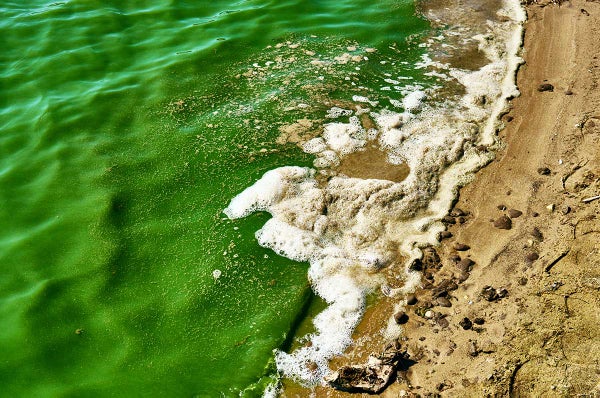
Some of this dust settled on desolate ocean stretches, creating phytoplankton blooms. For instance, studies have shown that the dust triggered phytoplankton blooms in the Antarctica Ocean during the last ice age. The region was a carbon sink.
“The ocean was green when the land was brown,” said Victor Smetacek, a biogeoscientist at the Alfred Wegener Institute’s Helmholtz Centre for Polar and Marine Research. He was not affiliated with the study.
Costa and her colleagues wanted to find out if the dusty atmosphere also stimulated CO2 sequestration in other ocean basins during the past ice age. In 2014, they embarked on an ocean voyage to the central equatorial Pacific Ocean, where they drilled into the sediment bed and collected six cores.
Costa isolated the samples of sediment that accrued during the ice age and compared those to samples from present day. She looked at markers indicating whether dust settled on the ocean, and whether phytoplankton had thrived as a result.
“We expected to see that when there was more dust, the algae would grow more,” she said. After all, that had happened in the Antarctic Ocean.
The scientists found that there was indeed more dust, but it had not stimulated phytoplankton growth. Nature’s iron fertilization experiment had failed in the equatorial Pacific.
“We think the algae weren’t able to use up that iron because they had less of other important nutrients,” Costa said.
The equatorial Pacific gets its nutrients from the Antarctic Ocean, carried on a water circulation called the “subantarctic mode water.”
“There is a limited amount of nutrients in the ocean, and if the Southern Ocean is using up those nutrients, there will be less available in the equatorial Pacific,” Costa said.
The finding suggests iron fertilization as a geoengineering tool may work only in the Antarctic Ocean. The question now is how much CO2 gets sequestered by dumping a certain quantity of iron.
Some experiments have been done, including one in the Antarctic Ocean in 2004 when Smetacek and his colleagues dropped 5 metric tons of iron sulfate and saw a 65-square-mile bloom. Over 13 days, some of those zooplankton aggregated and sank to the bottom of the ocean like a rock (ClimateWire, July 19, 2012).
“So far, the iron hypothesis continues to stand the test of time,” Smetacek said.
Reprinted from Climatewire with permission from Environment & Energy Publishing, LLC. www.eenews.net, 202-628-6500
