
While tornadoes normally take center stage during severe weather season, for Oklahoma City on Wednesday, it was torrential rains and flash flooding that overshadowed the twisters.
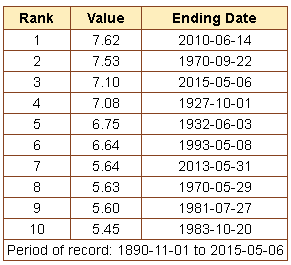
The city recorded more than 7 inches of rain in 24 hours, the third-highest single day rainfall total for any day since record-keeping began in 1891. The deluge caused major flooding that damaged roads and buildings and sent cars floating down streets turned into rivers.
While people in the Great Plains are no strangers to heavy downpours—the largest 24-hour rainfall total was recorded not long ago in June 2010—it’s something they, along with the rest of the nation, could expect more of as the world warms and the atmosphere sucks up more moisture.
On supporting science journalism
If you're enjoying this article, consider supporting our award-winning journalism by subscribing. By purchasing a subscription you are helping to ensure the future of impactful stories about the discoveries and ideas shaping our world today.
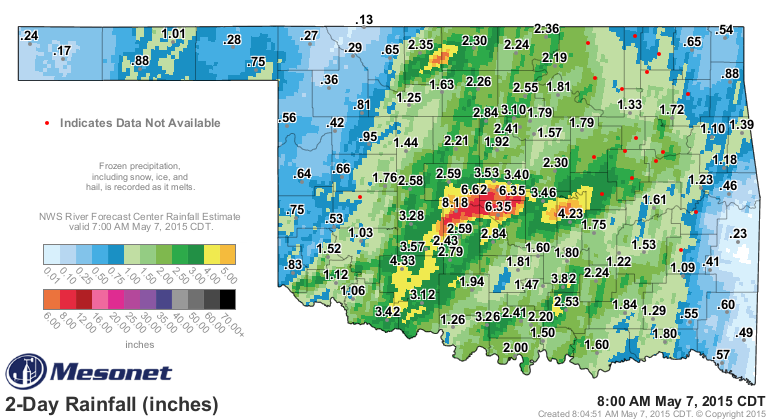
The rains that soaked central Oklahoma were the result of a severe weather outbreak that also spun up an estimated 51 tornadoes and dropped large hail, impacting communities from Texas to Nebraska. The storms continuously streamed over the Oklahoma City area, causing the rains to steadily and quickly build, as the graphic above clearly shows.
While the 24-hour rain total ranked as the third highest for the city, the 48-hour total came in at No. 2 in the rankings. Other areas in central Oklahoma may have seen even greater rainfall totals—up to 12 inches—according to theOklahoma Mesonet Ticker.
The rains Oklahoma City saw in just 24 hours were more than 70 percent of the rainfall total normally recorded for the whole year up until May 6, Climate Central calculated.
OMG....I have never seen this happen to a tornado shelter. We told you this rainfall in OKC was historic pic.twitter.com/cRqRZShniD
— Damon Lane (@KOCOdamonlane) May 7, 2015National Weather Service records suggest that in terms of 24-hour rainfall, yesterday’s storm was a 1-in-25 year event. Much of that rain fell in just a 6-hour interval, though, which is closer to a 1-in-100 year event, according to the same records.
While saying what role climate change may have played in this particular event is tricky, such downpours are expected to become more common as the world continues to warm thanks to the unabated buildup of carbon dioxide and other greenhouse gases in the atmosphere.
Carbon dioxide levels just passed another milestone, reaching a global average of 400 parts per million (ppm). The extra heat trapped by all that extra carbon dioxide has raised the global average temperature by 1.6°F since the beginning of the 20th century.
Because warmer air has a greater capacity to hold on to water, there’s more moisture available when rains fall. Even in places that are expected to become drier overall in a warming world, when it does rain, it’s more likely to be in concentrated bursts.
An increase in heavy downpours has already been observed across the U.S., though how much varies from region to region. The biggest increases have been in the Northeast and Midwest, though the Great Plains, which includes Oklahoma, has seen a 21 percent increase in such downpours since 1958, according to the National Climate Assessment.
Downpours like that are of major concern because they can cause extensive flash flooding, as they did in Oklahoma City. Flash floods happen because the rains come down so quickly and heavily that the ground and waterways can’t sop it up fast enough, allowing it to spill into streets and basements. Roads and other urban infrastructure can exacerbate the issue by making the ground more impermeable.
Such large amounts of water are incredibly powerful and can tear up roads, sidewalks and bridges, and just 2 feet of water can carry away most cars.
Damage from the floods in Oklahoma City on Wednesday caused one elementary school to close for the remainder of the school year. The rains also resulted in numerous calls for water rescues from cars and mobile homes by people trapped in the rising waters and caused at least one death from a woman who drowned in her storm shelter.
This article is reproduced with permission from Climate Central. The article was first published on May 7, 2015.