New Issue: Orbital Catastrophe Ahead? Read Now

How Can I "See" Memories?

Answered by Jame Ward, professor of cognitive neuroscience, U. of Sussex

Join Our Community of Science Lovers!

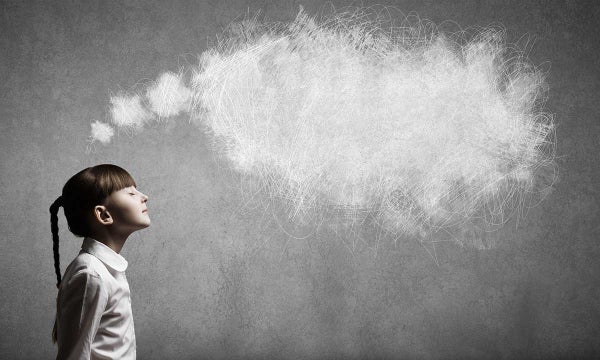
What you are describing is termed mental imagery, or the ability to create a mental picture of a person, place or experience without any external cues or stimuli. People differ greatly in the extent to which their recollections are visual.

Constructing a mental image relies on coordinating several different processes in the brain. The hippocampus, long regarded as the main storage site for memories of complex events, has recently—and perhaps surprisingly—been found to be important for imagining new or fictitious events. Indeed, recent research has shown that patients with damage to the hippocampus not only have problems remembering the past, they also struggle to imagine the future.

Although the hippocampus may be involved in combining various elements from a real or imagined scene, it probably has little to do with the experience of “seeing” an image in your mind. Creating a mental image requires further coordination involving regions of the brain that contribute to vision, such as the parietal lobes—which aid in perceiving spatial relations and perspective—and the temporal lobes—which help us to discern shape, color and faces. When we recall a friend's face, for instance, we activate the same neurons that would be involved in actually seeing the person if he or she was standing right in front of us, as well as those neurons in the hippocampus that encode memories. Thus, intriguingly, with mental imagery, we see from the inside out rather than the outside in.


On supporting science journalism

If you're enjoying this article, consider supporting our award-winning journalism by subscribing. By purchasing a subscription you are helping to ensure the future of impactful stories about the discoveries and ideas shaping our world today.


Question submitted by Alexandra Coppinger, Melbourne, Australia

SA Mind Vol 27 Issue 1This article was published with the title “How is it that I can “see” memories?” in SA Mind Vol. 27 No. 1 (), p. 70
doi:10.1038/scientificamericanmind0116-70b

Subscribe to Support Independent Journalism

Great science journalism requires human expertise, time, effort and creativity. And it costs money. That’s why I and the journalists here at Scientific American hope you’ll join our community.

When you subscribe, you are supporting staff and freelance journalists who are passionate about telling science stories that are true, important and compelling. Our editors and reporters are often experts in their fields, which means they understand the nuances of big discoveries and can untangle the breakthroughs from the hype. With a subscription, you are also supporting rigorous fact-checking to ensure the words we publish are precise and accurate. And you’re supporting original illustrations, graphics and photos that bring you closer to an advanced laboratory, an ice sheet in Antarctica or a space mission in orbit. You’re helping us craft other types of high-quality journalism as well: Our newsletters are carefully written, edited and curated by staffers you have or will come to know and love. Our Science Quickly podcast is based on original reporting, collaboration with editors and scientists and exacting production.

Subscriptions keep this engine running so we can continue to deliver thoughtful, rigorous and independent science journalism to you. In an era of viral misinformation, this work is crucial. If you value what we do, I hope you’ll consider joining us as a subscriber

Thank you,

Jeanna Bryner, Editor in Chief, Scientific American

Subscribe