
We have heard for years that planting trees can help save the world from global warming. That mantra was mostly a statement of faith, however. Now the data finally exist to show that if the right species of trees are planted in the right soil types across the planet, the emerging forests could capture 205 gigatons of carbon dioxide in the next 40 to 100 years. That's two thirds of all the CO2humans have generated since the industrial revolution. "Forest restoration is by far our most powerful planetary solution today," says Tom Crowther, a professor of global ecosystem ecology at the Swiss Federal Institute of Technology in Zurich, and an author of a study published Thursday in Science that generated the eye-opening number.
The study team analyzed almost 80,000 satellite photo measurements of tree cover worldwide and combined them with enormous global databases about soil and climate conditions, evaluating one hectare at a time. The exercise generated a detailed map of how many trees the earth could naturally support—where forests grow now and where they could grow, outside of areas such as deserts and savannahs that support very few or no trees. The team then subtracted existing forests and also urban areas and land used for agriculture. That left 0.9 billion hectares that could be forested but have not been. If those spaces were filled with trees that already flourish nearby, the new growth could store 205 gigatons of carbon by the time the forests mature.
After 40 to 100 years, of course, the storage rate would flatten as forest growth levels off—but the researchers say the 205 gigatons would be maintained as old trees die and new ones grow. There would be "a bank of excess carbon that is no longer in the atmosphere," Crowther says.
On supporting science journalism
If you're enjoying this article, consider supporting our award-winning journalism by subscribing. By purchasing a subscription you are helping to ensure the future of impactful stories about the discoveries and ideas shaping our world today.
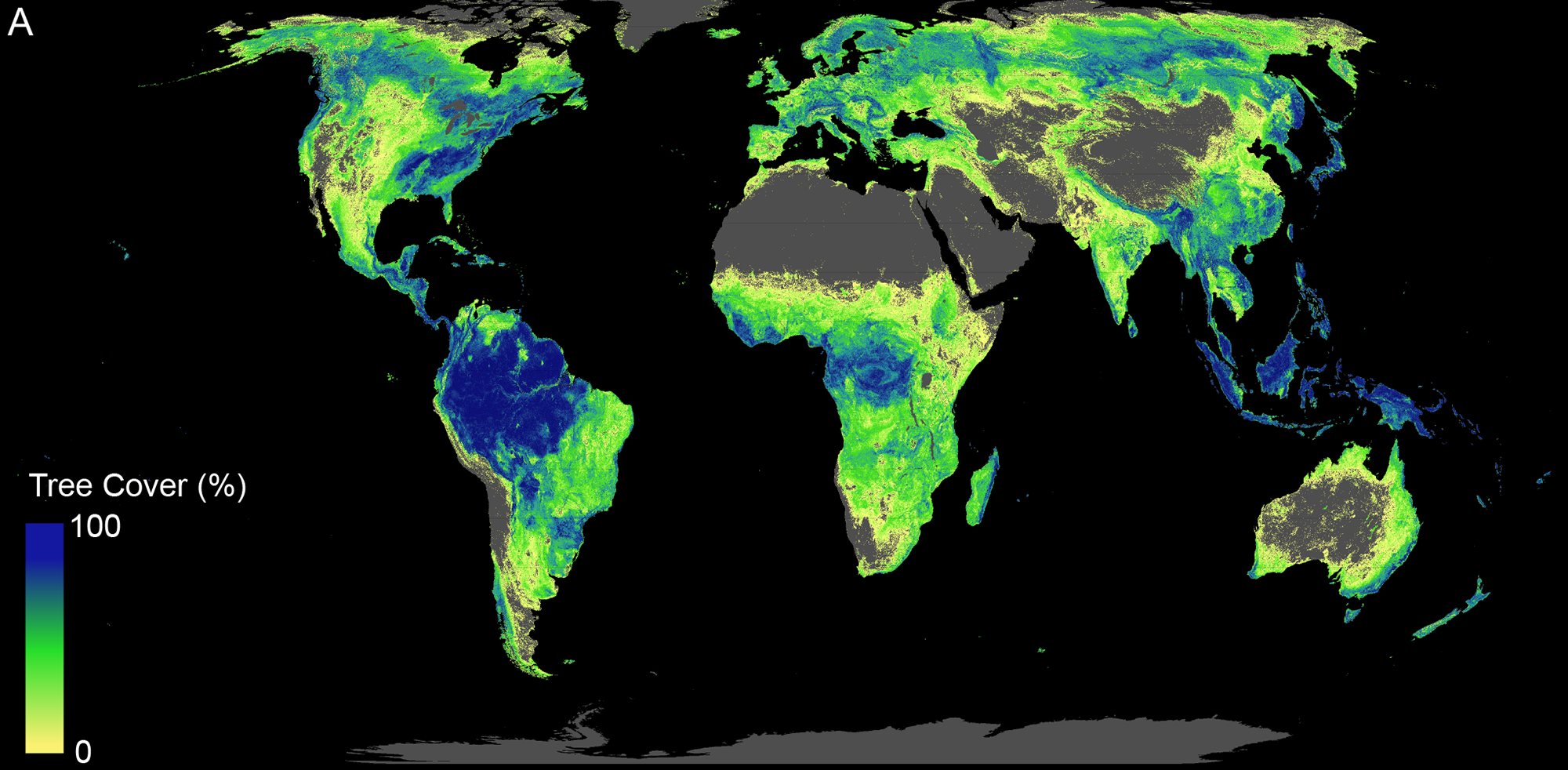
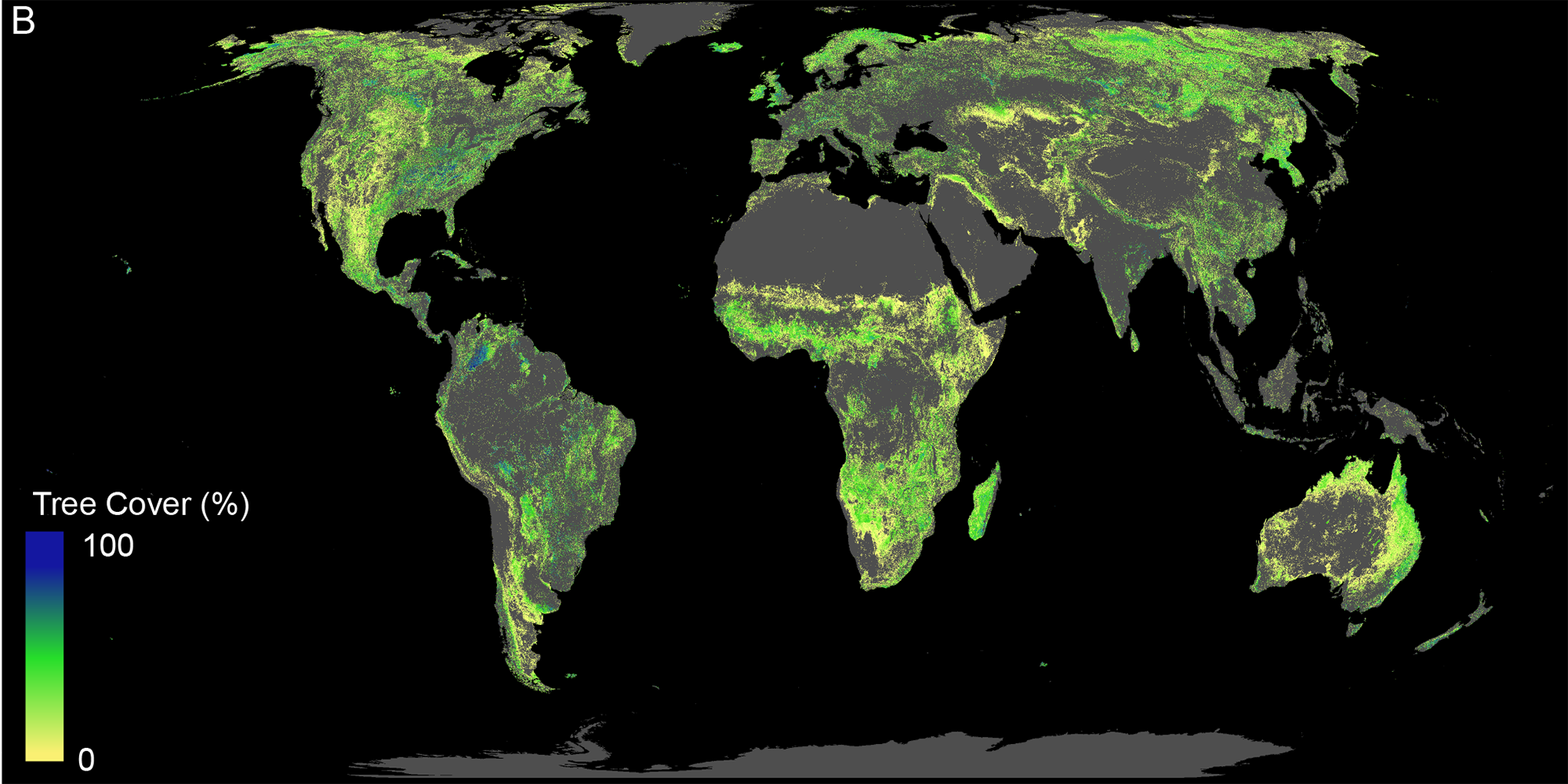
Earth could naturally support 4.4 billion hectares of forest (colors in top map; gray represents areas such as desert that have no potential). When existing forests, agricultural lands and urban areas are subtracted from potential forest lands, 0.9 billion hectares remain (colors in bottom map) where new forests could grow, pulling 205 billion tons of CO2 out of the atmosphere. Credit: “The Global Tree Restoration Potential.” Jean-Francois Bastin et al. in Science, Vol. 365, issue 6448, July 5, 2019.
The team has also created a planning tool linked to the map that will be open to the public starting July 5. Individuals and organizations can zoom in to any location to see where new forests could be started.
Crowther has not studied other carbon sequestration techniques that have been discussed a lot lately, such as ocean fertilization (growing algae to soak up carbon) or direct air capture (machines that pull CO2 from the atmosphere), but he thinks they would be much more expensive than growing trees. He estimates it might cost the world $300 billion to plant the 0.9 billion hectares. And new forests provide another strong benefit: they restore biodiversity, which is crucial because so many plant and animal species are disappearing. Crowther says he began to study reforestation because he was really looking for ways to stop species loss. Tremendous benefits beyond carbon sequestration "come from biodiversity—providing food, medicines, clean water and all sorts of things for humans," he says.
Pulling all that carbon from the atmosphere could take longer than anticipated, however. Forests might need more like 70 to 100 years to reach full maturity, says Robin Chazdon, an ecologist and evolutionary biologist at the University of Connecticut, who was not involved in the study. Yet she says any replanting should begin as soon as possible because climate change is likely to compromise forests' ability to grow. Higher temperatures increase tree respiration, which causes them stress. And drought will widen, reducing tree growth. Crowther adds that although climate change will allow more trees to grow in northern latitudes, it will also dry out tropical latitudes. Tree loss in the tropics, he says, will outpace gains in the high north.
Chazdon cautions that replanting may not be as simple as it sounds, and she wonders if 0.9 billion new hectares will ever be possible, given competing priorities. More trees consume more water, and this could threaten agriculture or other human activities in dry areas. And local people may not want forests if they need to generate income from the land, say from farming or herding. Some prominent reforestation programs, such as ones in the Philippines, have failed "because there was no local involvement," she says.
The best places to start reforestation are where multiple benefits can readily be gained. In a July 3 Science Advances paper, Chazdon and colleagues identify a series of locations in the tropics that have higher-than-average potential for benefits as well as ease of getting started.
All the new tree work, Chazdon says, signals that "we're entering into the practicality stage" of smart reforestation. "We can bring a lot of interdisciplinary science to bear. I hope there will be more interaction between scientists and politicians, realizing that the tools we now have can guide reforestation that is the most cost-effective, and has multiple benefits and fewer tradeoffs."
