
By Julia Symmes Cobb
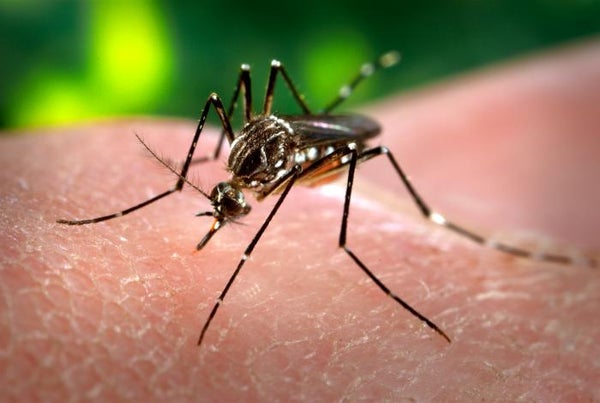
More than 2,100 pregnant Colombian women are infected with the mosquito-borne Zika virus, the country's national health institute said on Saturday, as the disease continues its spread across the Americas.
The virus has been linked to the devastating birth defect microcephaly, which prevents fetus' brains from developing properly. There is no vaccine or treatment.
On supporting science journalism
If you're enjoying this article, consider supporting our award-winning journalism by subscribing. By purchasing a subscription you are helping to ensure the future of impactful stories about the discoveries and ideas shaping our world today.
There are 20,297 confirmed cases of the disease in Colombia, the national health institute said in a epidemiology bulletin, among them 2,116 pregnant women.
There are so far no reported cases of microcephaly or deaths from the virus in Colombia.
The institute said 37.2 percent of pregnant women with Zika live in Norte de Santander province, along the eastern border with Venezuela.
Earlier figures from the health ministry showed 560 pregnant women had the disease, out of more than 13,500 infections.
Zika cases have been confirmed in 23 countries and territories in the Americas and scientists are racing to develop a vaccine for the virus.
Nearly half of Colombia's Zika cases have been reported in the country's Caribbean region, the bulletin said. More than 60 percent of those infected are women.
The health ministry has said Zika infection falls within the health requirements women must meet to get abortions in the country, which restricts the procedure unless patients are victims of rape, have significant medical problems or the fetus is fatally deformed.
Many women, especially those living far from large cities, struggle to find abortion providers even when they meet the legal requirements and illegal abortions are widespread.
The government has urged women to delay pregnancy for six to eight months to avoid potential infection. Officials expect up to 700,000 cases.
Brazil is the country hit hardest by the disease. It has reported around 3,700 cases of microcephaly strongly suspected to be related to Zika.
The World Health Organization has said as many as 4 million people in the Americas may become infected.