
Jobs, national security and climate change were all part of an urgent appeal at an emotional summit yesterday on Capitol Hill to keep America's nuclear fleet running.
"We are supposed to be adding zero carbon sources, not subtracting or simply replacing by building to just kind of tread water," said Energy Secretary Ernest Moniz.
Nuclear energy provides almost two-thirds of the United States' clean electricity. With only five new reactors under construction after a 30-year pause, the country's 99 existing nuclear reactors aren't getting any younger. With license renewals coming up for many plants, some operators are wavering over whether it's worth the hassle.
On supporting science journalism
If you're enjoying this article, consider supporting our award-winning journalism by subscribing. By purchasing a subscription you are helping to ensure the future of impactful stories about the discoveries and ideas shaping our world today.
Moniz noted that five plants have been retired early over the past few years and three more are scheduled for retirement, a prospect that would undermine progress toward climate change objectives.
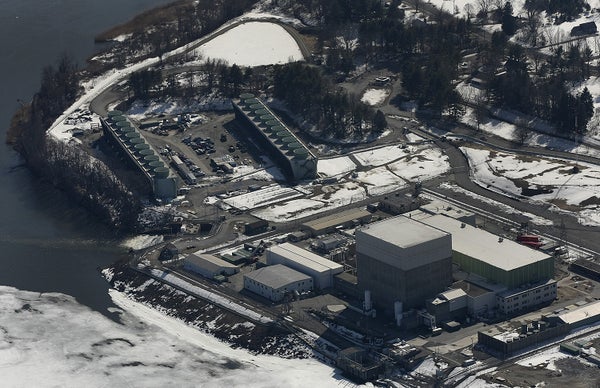
He cited the 2014 shutdown of the 620-megawatt Vermont Yankee plant in Vernon, Vt. Natural gas filled much of the shortfall, but even as overall electricity production went down in the region, greenhouse gas emissions went up.
"That's the kind of confluence of data we would like to avoid more of," he said. "When natural gas has displaced coal, that has one CO2 impact; when it displaces nuclear, it has the opposite. This is not very complicated."
The announcement of the closure of the plant, which employed 600 workers, was devastating to the 2,000-resident town.
"Other than the death of my parents, I think it's one of saddest days I've ever lived through," said Patricia O'Donnell, former selectboard chairwoman of Vernon. She said the plant provided good-paying skilled jobs to the region and provided a huge chunk of the region's clean energy.
"This is what we as a nation are going to lose if we don't do something to help the nuclear industry," she said. "There's so much more to this story and so much more to this issue than where the electricity's coming from; there's a real human aspect to this."
Energy markets, fuel challenges
Rep. Adam Kinzinger (R-Ill.), whose district encompasses four nuclear power plants, said there are important geopolitical and national security factors to consider in maintaining nuclear power in the United States.
"When we are the global leader in nuclear, we get to write the rules," he said. "We get to write the rules on proliferation. We get to write the rules on technology.
"We have been ceding our leadership lately, however, to the Russians. They're building 40 percent of new nuclear power plants around the world," he added. "I gotta tell ya, I don't think the Russians have the same kind of concern with nuclear proliferation that the United States does."
While nuclear power plants may yield benefits for climate change over the coming decades, existing plants have short-term benefits, as well, like keeping dangerous air pollution at bay.
"My city [Newark] has asthma rates for our children that are epidemic, about three to four times what they are in other communities," said Sen. Cory Booker (D-N.J.). "I know what the urgencies are here in the immediate, right now. I know the challenges that global warming [presents] my state and the rise of sea levels."
"I also know we can't get there unless we substantially support and even embolden the nuclear energy sector," he said. "We've got to support the existing fleet."
However, there is no clear remedy for the nuclear energy industry's woes. Many nuclear plants are facing stiff competition from other fuels, and certain energy markets are making it difficult for operators to justify keeping the plants open.
Debates over regulation
Booker suggested extending the production tax credit for nuclear energy and an economywide price on carbon.
"That would be a big help and again, be a step toward leveling the playing field," he said. "The real problem is our economy and our federal policies do not fully recognize the true value of nuclear power as we have it now."
Mike Langford, national president of the Utility Workers Union of America, said the government needs to step in and take the energy industry off the open market.
"I start by saying let's reregulate, because this industry is too vulnerable to be left up for chance," he said. "It needs to be regulated. Folks, this is our lifeline. Energy is the engine of our economy, and we're leaving it up for chance."
But Sen. Mike Crapo (R-Idaho) said that government influence in the energy market is part of why the nuclear industry is in such dire straits in the United States, even as energy demand grows.
"This demand is not enough to overcome the challenges that are leading some plants to shut down," he said. "One of the challenges against the demand for nuclear energy is bad public policy and, in my opinion, overregulation. The government nearly regulated the industry out of business in the 1970s and 1980s."
He did see a glimmer of optimism for the industry. On Wednesday, the Senate Committee on Environment and Public Works voted 17-3 to approve the bipartisan "Nuclear Energy Innovation and Modernization Act." The bill would make operations and fee structures in the Nuclear Regulatory Commission more transparent, making investment in nuclear power less daunting, Crapo said.
Reprinted from Climatewire with permission from Environment & Energy Publishing, LLC. www.eenews.net, 202-628-6500