
By Alister Doyle
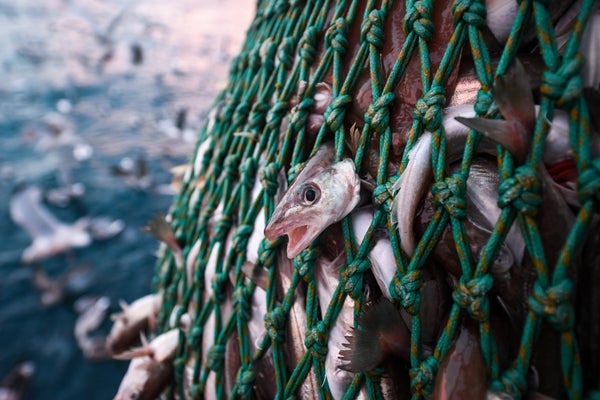
OSLO, Sept 16 (Reuters) - The amount of fish in the oceans has halved since 1970, in a plunge to the "brink of collapse" caused by over-fishing and other threats, the WWF conservation group said on Wednesday.
Populations of some commercial fish stocks, such as a group including tuna, mackerel and bonito, had fallen by almost 75 percent, according to a study by the WWF and the Zoological Society of London (ZSL).
On supporting science journalism
If you're enjoying this article, consider supporting our award-winning journalism by subscribing. By purchasing a subscription you are helping to ensure the future of impactful stories about the discoveries and ideas shaping our world today.
Marco Lambertini, director general of WWF International, told Reuters mismanagement was pushing "the ocean to the brink of collapse".
"There is a massive, massive decrease in species which are critical", both for the ocean ecosystem and food security for billions of people, he said. "The ocean is resilient but there is a limit."
The report said populations of fish, marine mammals, birds and reptiles had fallen 49 percent between 1970 and 2012. For fish alone, the decline was 50 percent.
The analysis said it tracked 5,829 populations of 1,234 species, such as seals, turtles and dolphins and sharks. It said the ZSL data sets were almost twice as large as past studies.
"This report suggests that billions of animals have been lost from the world's oceans in my lifetime alone," Ken Norris, director of science at the ZSL, said in a statement. "This is a terrible and dangerous legacy to leave to our grandchildren."
Damage to coral reefs and mangroves, which are nurseries for many fish, add to problems led by over-fishing. Other threats include coastal development, pollution and climate change, which is raising temperatures and making waters more acidic.
The study said the world's fishing fleets were too big and supported by subsidies totalling $14-35 billion a year.
Later this month, governments are due to adopt new U.N. sustainable development goals, including ending over-fishing and destructive fishing practices by 2020 and restoring stocks "in the shortest time feasible".
Closing fishing grounds and cracking down on illegal fishing gives stocks a chance to recover, Lambertini said. Some grounds, such as those off Fiji, have been revived by stronger protection.
World marine fish catches dipped to 79.7 million tonnes in 2012 from 82.6 million in 2011, according to the U.N.'s Food and Agriculture Organization. Safeguarding the oceans can help economic growth, curb poverty and raise food security, it says. (Reporting by Alister Doyle; editing by Andrew Roche)