Plight of the Long-Distance Flyers

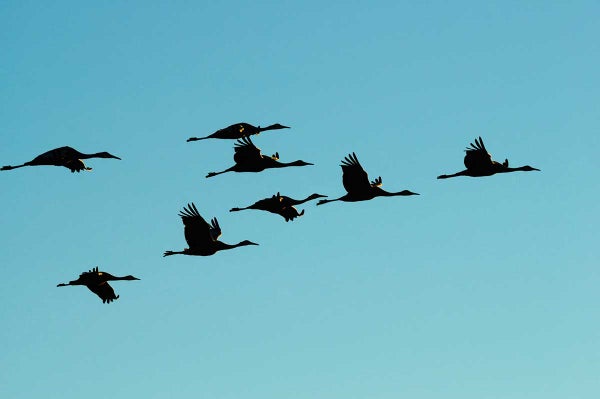
Individual countries may protect migratory birds but the great length of their journeys are endangered

©iStock.com

Join Our Community of Science Lovers!


On supporting science journalism

If you're enjoying this article, consider supporting our award-winning journalism by subscribing. By purchasing a subscription you are helping to ensure the future of impactful stories about the discoveries and ideas shaping our world today.


The cerulean warbler breeds in the mountains of West Virginia and Tennessee but winters far to the south in places like Venezuela and Colombia. Mining in the U.S. and the growth of coffee and cocoa plantations in South America are stripping away its habitats. All in all, 91 percent of 1,451 species of migratory birds are losing lands essential to their annual journeys, researchers report in today’s issue of Science magazine. It is not a problem that can be solved by one country. For example, Germany protects adequate land for 98 percent of its migrant birds but fewer than 13 percent of those species are protected across their global ranges. Roll your mouse over the highlighted countries on this map to see some key differences between countrywide protection and entire global routes.

The U.S. does poorly all on its own, decently protecting habitat for just over 22 percent of migrant birds within its borders. The fragmented nature of protection does not bode well for the endangered Far Eastern curlew, which journeys each year from Siberia to Australia and is losing essential stopovers around the Yellow Sea. Coordinated international action is needed but hard to bring about, the scientists say.

Josh Fischman is senior editor for special projects at Scientific American and covers medicine, biology and science policy. He has written and edited about science and health for Discover, ScienceEarth and U.S. News & World Report. Follow Fischman on Bluesky @jfischman.bsky.social

More by Josh Fischman

It’s Time to Stand Up for Science

If you enjoyed this article, I’d like to ask for your support. Scientific American has served as an advocate for science and industry for 180 years, and right now may be the most critical moment in that two-century history.

I’ve been a Scientific American subscriber since I was 12 years old, and it helped shape the way I look at the world. SciAm always educates and delights me, and inspires a sense of awe for our vast, beautiful universe. I hope it does that for you, too.

If you subscribe to Scientific American, you help ensure that our coverage is centered on meaningful research and discovery; that we have the resources to report on the decisions that threaten labs across the U.S.; and that we support both budding and working scientists at a time when the value of science itself too often goes unrecognized.

In return, you get essential news, captivating podcasts, brilliant infographics, can't-miss newsletters, must-watch videos, challenging games, and the science world's best writing and reporting. You can even gift someone a subscription.

There has never been a more important time for us to stand up and show why science matters. I hope you’ll support us in that mission.

Thank you,

David M. Ewalt, Editor in Chief, Scientific American

Subscribe