
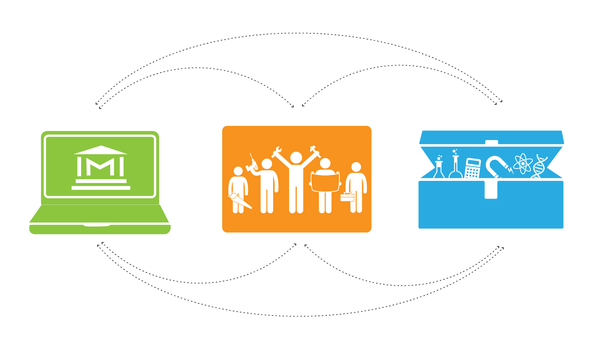
Arizona State University is designing a museum that will have no permanent collections, no rare artifacts and no famous artwork on display. In fact, all of its content and curation will come from anyone willing to participate. It will never be found on a map, either, as it has no walls, displays or even a physical address. That’s because the museum, set to launch in the fall of 2017, will be digital, and it is intended to get people thinking about the future of science using a very old tale.
The A.S.U. digital museum will revolve around Mary Shelley’s Frankenstein, the 1818 classic that inaugurated the science fiction genre. The museum—set to have a formal grand opening in 2018 to celebrate the novel’s bicentennial—invites people from all disciplines to create their own content as a way to explore the ethics of scientific breakthroughs. The intent is to start with a well-known story that would sneak the interplay of scientific progress and ethics into the conversation. “We wanted to get people thinking about all of the incredible advances in fields like synthetic biology and robotics and about the ethics and social implications, but not hitting them over the head with the ethical questions,” says Ed Finn, director of the Center for Science and the Imagination at A.S.U. Tempe.
Frankenstein was a natural fit for the project; the well-known story deals with the interaction of a creator, his creation and the impending moral implications. According to Juliet Burba, chief curator at The Bakken Museum in Minneapolis, the novel set the trend for science and society–steeped thrillers, from The Blob to Jurassic Park. “Scientist goes rogue, scientist creates something thinking they’re doing the greatest thing ever that comes back to haunt humanity,” Burba says.
On supporting science journalism
If you're enjoying this article, consider supporting our award-winning journalism by subscribing. By purchasing a subscription you are helping to ensure the future of impactful stories about the discoveries and ideas shaping our world today.
The Bakken, a partner of A.S.U.’s digital museum project, was founded by Earl Bakken, who developed the first external battery-operated pacemaker. The Minneapolis museum focuses on the role of electricity and magnetism in life science and medicine. The story of Dr. Frankenstein and his monster had a profound impact on Bakken’s life, and as a result his museum has an extensive Frankenstein-related collection. The Bakken is creating a physical museum exhibit, called Mary and her Monster, to go along with the A.S.U.’s digital one. Mary and her Monster will follow Shelley’s life and highlight the societal concerns over science—specifically how electricity brought Frankenstein’s monster to life, a topic Shelley reflected on in her writing.
As a partnering museum, The Bakken’s exhibit will provide context from which participants can draft their own stories and ideas that could then be uploaded to the digital museum as its content.
The Bakken and partner museums, including the Museum of Science in Boston and the Rosenbach Museum & Library in Philadelphia, will also have in-museum activity kits. Dubbed Frankenstein’s Footlocker, these kits, which are provided to them by A.S.U., contain maker experiments and activities such as dissecting toys and building circuits. A home version of these activities, called Frankenstein’s Workbench, will be available to ensure even those who can’t make it to the museums have access to the activities and will provide additional maker challenges.
Putting technology in the hands of nonscientists allows those who normally would not come in contact with the field to explore science, discovery and morality. “An aspect of it is trying to get people to tinker with the technology and to feel comfortable enough to have some sense of efficacy or ownership,” says Micah Lande, an engineering professor at A.S.U. and collaborator on the project.
Writing activities will also invite interested parties to rework the Frankenstein story and tinker with the power of creation.
Fiction has always held up a mirror to societal anxieties regarding scientific progress. This latest A.S.U. project—which has received a $3-million grant from the National Science Foundation—takes it one step further: Inviting people to take the story into their own hands to better understand how these breakthroughs might impact society. “Literature and in particular science fiction is a really cheap laboratory,” Finn says. “It’s a really great way to think through the potential consequences of new discoveries, to inspire people to take on new challenges and to work through those ideas not just in a technical context but in a human one.”