
By Lisa Rapaport
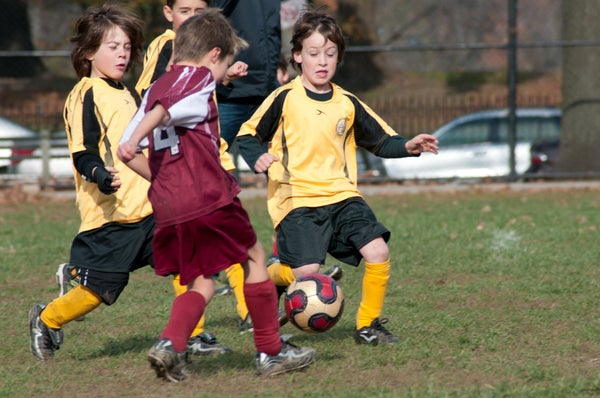
(Reuters Health) - As soccer has soared in popularity in recent decades, injury rates for youth players have also surged, a U.S. study suggests.
The injury rate for youth soccer players aged 7 to 17 more than doubled over the 25-year period ending in 2014, according to an analysis of children treated in U.S. hospitals.
On supporting science journalism
If you're enjoying this article, consider supporting our award-winning journalism by subscribing. By purchasing a subscription you are helping to ensure the future of impactful stories about the discoveries and ideas shaping our world today.
Even though concussions accounted for just 7 percent of these injuries, the annual rate of concussions surged by almost 1,600 percent during the same period.
“Both the number and rate of soccer-related injuries increased significantly over the study period,” said senior study author Dr. Huiyun Xiang, who leads pediatric trauma research at Nationwide Children’s Hospital and Ohio State University College of Medicine in Columbus.
“This means that the increase in injuries doesn’t just come from more children playing soccer, but that athletes may be getting injured more frequently,” Xiang said by email.
Roughly 3 million children 7 to 17 years old have been treated for soccer injuries in U.S. hospitals during the 25-year period ending in 2014, averaging about 120,000 annually.
Children 12 and older accounted for 73 percent of the injuries, with the average age of injured athletes hovering around 13, the study found.
Most injuries occurred when players collided with each other or with the ball.
The majority of injuries were sprains, fractures and soft tissue injures.
One limitation of the study is that it only included hospital data, which means authors didn’t have information about injuries treated in other settings.
In addition, researchers couldn’t tell whether injuries happened in practice or competition or how many occurred for each hour athletes played soccer.
It’s also possible some of the increase in injuries came from a growing awareness of concussions and head traumas that prompts more kids to be treated in hospitals, Xiang said. Children may also be playing more intensely, especially during middle school and high school.
“Owing to the sport getting increasingly commercialized, the stakes have risen over the years and we are seeing more contact injuries compared to about 10-15 years ago,” said. Dr. Swarup Mukherjee, a researcher at Nanyang Technological University in Singapore.
“Having said that, the most common injuries in soccer are still strains and sprains,” Mukherjee, who wasn’t involved in the study, said by email.
Another problem may be that children are increasingly specializing in a single sport, which can lead to more injuries than competing on a variety of different teams, said Dr. Elizabeth Gardner, team physician for Yale University Athletics in New Haven, Connecticut.
“With bigger, stronger players playing soccer year round, it is not surprising that there is an increase in the injury rate,” Gardner, who wasn’t involved in the study, said by email.
Continual year-round play can bring more opportunities for sports injuries because children are simply on the field for more hours each year, and children may also get hurt because of overuse of certain body parts, said Scott Sailor, president of the National Athletic Trainers’ Association.
“Giving athletes a break throughout the year either by playing other sports or simply taking time to recover is important for athletes but much less common today than it was a couple decades ago,” Sailor, who wasn’t involved in the study, said by email.