New Issue: Orbital Catastrophe Ahead? Read Now

Stephen Hawking and Yuri Milner Announce $100M Initiative to Seek ET

Milner, a tech start-up entrepreneur and philanthropist, is partnering with scientists around the world to search for life among the stars

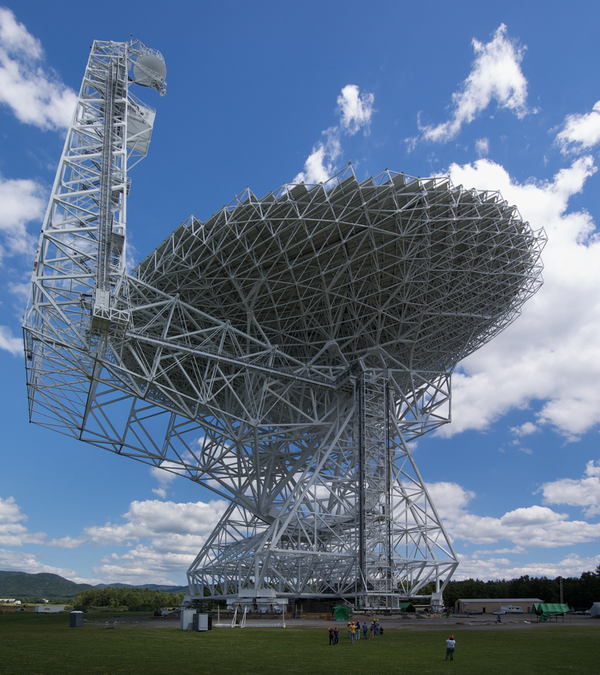
photo of the Green Bank Telescope, the world's largest steerable radio telescope

The Green Bank Telescope is the world's largest steerable radio telescope, and one of three telescopes Breakthrough Listen will use extensively in its groundbreaking search for extraterrestrial intelligence.

Wikimedia Commons/Geremia

Join Our Community of Science Lovers!

SETI—the Search for Extraterrestrial Intelligence—has been one of the most captivating areas of science since its inception in 1960, when the astronomer Frank Drake used an 85-foot radio telescope in the first-ever attempt to detect interstellar radio transmissions sent by beings outside our solar system. Yet despite its high public visibility and near-ubiquity in blockbuster Hollywood science fiction, throughout most of its 55-year history SETI has languished on the fringes of scientific research, garnering relatively scant funding and only small amounts of dedicated observation time on world-class telescopes.

Today, in a live webcast originating from London and set for 6:30 am Eastern, the Russian entrepreneur Yuri Milner, along with the physicist Stephen Hawking, is announcing his intentions to change that. Watch the live streamed event below, starting at 6:30 am.


On supporting science journalism

If you're enjoying this article, consider supporting our award-winning journalism by subscribing. By purchasing a subscription you are helping to ensure the future of impactful stories about the discoveries and ideas shaping our world today.


Although Milner has made his name—and billions of dollars—through investments in Facebook, Alibaba, and many other tech start-ups, his true passion is science, which he has demonstrated through his formation of the Breakthrough Prize Foundation. This organization awards the world's most lavish scientific prizes. Milner's latest project is part of the Foundation's new Breakthrough Initiatives division and is called Breakthrough Listen. Providing $100 million in funding over the next decade to top SETI researchers, Breakthrough Listen will allow new state-of-the-art radio and optical surveys to take place using the world's premiere telescopes, creating the most ambitious and robust SETI program yet performed. The project is set to begin making observations in 2016.

Following the live webcast, Milner and distinguished scientists participating in Breakthrough Listen will conduct a media teleconference to discuss the new project and answer questions. Scientific American will continue to follow this story as it develops.

Lee Billings is a science journalist specializing in astronomy, physics, planetary science, and spaceflight and is senior desk for physical science at Scientific American. He is author of a critically acclaimed book, Five Billion Years of Solitude: The Search for Life Among the Stars, which in 2014 won a Science Communication Award from the American Institute of Physics. In addition to his work for Scientific American, Billings’s writing has appeared in the New York Times, the Wall Street Journal, the Boston Globe, Wired, New Scientist, Popular Science and many other publications. Billings joined Scientific American in 2014 and previously worked as a staff editor at SEED magazine. He holds a B.A. in journalism from the University of Minnesota.

More by Lee Billings

Subscribe to Support Independent Journalism

Great science journalism requires human expertise, time, effort and creativity. And it costs money. That’s why I and the journalists here at Scientific American hope you’ll join our community.

When you subscribe, you are supporting staff and freelance journalists who are passionate about telling science stories that are true, important and compelling. Our editors and reporters are often experts in their fields, which means they understand the nuances of big discoveries and can untangle the breakthroughs from the hype. With a subscription, you are also supporting rigorous fact-checking to ensure the words we publish are precise and accurate. And you’re supporting original illustrations, graphics and photos that bring you closer to an advanced laboratory, an ice sheet in Antarctica or a space mission in orbit. You’re helping us craft other types of high-quality journalism as well: Our newsletters are carefully written, edited and curated by staffers you have or will come to know and love. Our Science Quickly podcast is based on original reporting, collaboration with editors and scientists and exacting production.

Subscriptions keep this engine running so we can continue to deliver thoughtful, rigorous and independent science journalism to you. In an era of viral misinformation, this work is crucial. If you value what we do, I hope you’ll consider joining us as a subscriber

Thank you,

Jeanna Bryner, Editor in Chief, Scientific American

Subscribe