
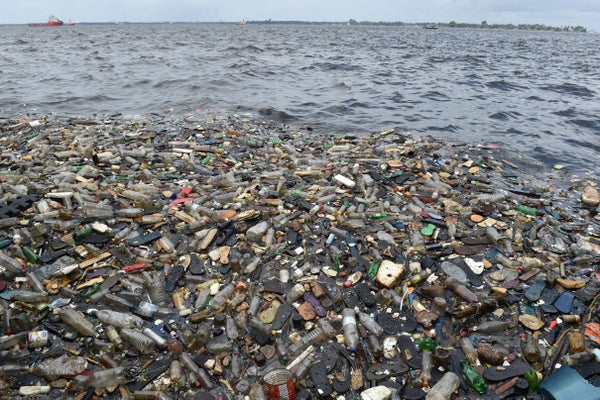
The 2015 science research that set the Internet abuzz included a super antibiotic, plastics pollution in the ocean, climate change, and species extinction, according to Altmetric, a start-up that analyzes online activity surrounding academic papers.
Research never rests: every year thousands of scientific articles are published across dozens of journals and disciplines. Some studies capture the media’s attention and get coverage in numerous news stories; others speak to a more niche audience and take off in passionate social media discussions. For the second year Altmetric has compiled a list of the top 100 academic articles of the year. They studied the attention garnered by scientific articles from November 2014 up until November 16, 2015, examining how papers fared in news coverage and social media outlets such as Twitter, Facebook, and the popular Chinese microblogging site Sina Weibo. They also looked to see if studies were referenced by Wikipedia and policy papers outlining plans of actions written by analysts and think tanks.
To be clear, theirs is not a list of the most important studies of 2015. “It’s not about quality, necessarily, or even always about impact,” says Stacy Konkiel, an outreach manager at Altmetric. “We’re just looking at attention.” That explains how the twentieth overall story achieved its rank. On the surface, it was a paleontology paper. But it wasn’t the new horned dinosaur that interested the public: It was a marriage proposal tucked away in the paper’s footnotes.
On supporting science journalism
If you're enjoying this article, consider supporting our award-winning journalism by subscribing. By purchasing a subscription you are helping to ensure the future of impactful stories about the discoveries and ideas shaping our world today.
This year’s list includes studies from 34 different journals—both traditional and open access, the latter of which is steadily gaining ground and tends to get more of a boost from social media. Forty-two of the top 100 studies came from an open access journal.
More than half of the hottest studies were health-related, with environment-related studies trending right behind. Some of these studies might have gotten a boost from the attention on climate change due to the COP21 talks in Paris. These papers were particularly successful with traditional news coverage, with some having more than 100 news articles written about them.
Health and environment are typically hot topics, but there were surprises too: On the list was a story that gained quite a bit of traction (the eighth most popular article) despite the fact it didn’t belong to either of the popular categories and only had two news articles written about it. The study, which compared the time effectiveness of major document preparation systems (word processors, such as Microsoft Word and the science-beloved LaTeX,) used by researchers to create their manuscripts saw 1,000 more tweets than any of the other top ten articles. “That is very surprising to me, personally, because it’s such a niche audience,” Konkiel says. “It obviously captured the interest of scientists who are very active on social media.”
The most-tweeted about article, a psychology study investigating whether or not sexist video games imparted sexist attitudes or mindsets onto the people who played them, was also an outlier. The study shared the most via Facebook, on the other hand, was about Homo erectus using shells as tools. Neither, clearly, involved health or environment. “We’re definitely seeing social media amplify studies that the mainstream media wouldn’t pick up,” Konkiel says. “As long as there’s an active community on social media, we see stories that otherwise might be niche get a lot of attention as measured by our score.”
“It’s not just about how many citations you’ve got or the impact factor of the journal you’ve published in, it’s who’s they’re sharing it with, and if they’re incorporating it into their day to day lives,” Konkiel says.