
Big changes are afoot for the energy sector in the next 25 years. Coal and gas are headed out and solar and wind are rushing to take their place on a multi-trillion dollar investment bonanza, according to a new report from Bloomberg New Energy Finance that scopes out the power generating landscape through 2040.
The main reason for the big shift in power generation isn’t likely to be because of a grand climate agreement, national polices or carbon pricing scheme, though. Instead, it comes down to cold, hard cash with renewables offering more power-generating bang for the buck than fossil fuels. Here are the three big numbers.
1. The world will invest $12.2 trillion in new power generation
Since 2004, renewable energy investments have risen from $43 billion to $270 billion annually. In 2014, most of that money went to China, a pattern that’s expected to continue through 2040.
On supporting science journalism
If you're enjoying this article, consider supporting our award-winning journalism by subscribing. By purchasing a subscription you are helping to ensure the future of impactful stories about the discoveries and ideas shaping our world today.
The world will spend a combined $12.2 trillion on new power-generating capacity over the next 25 years. The majority of that—two-thirds to be exact—will go to renewables like wind and solar thanks to falling costs. An estimated $3.7 trillion alone will go into both rooftop and utility-scale solar making it the biggest growing facet of the power-generating system globally.
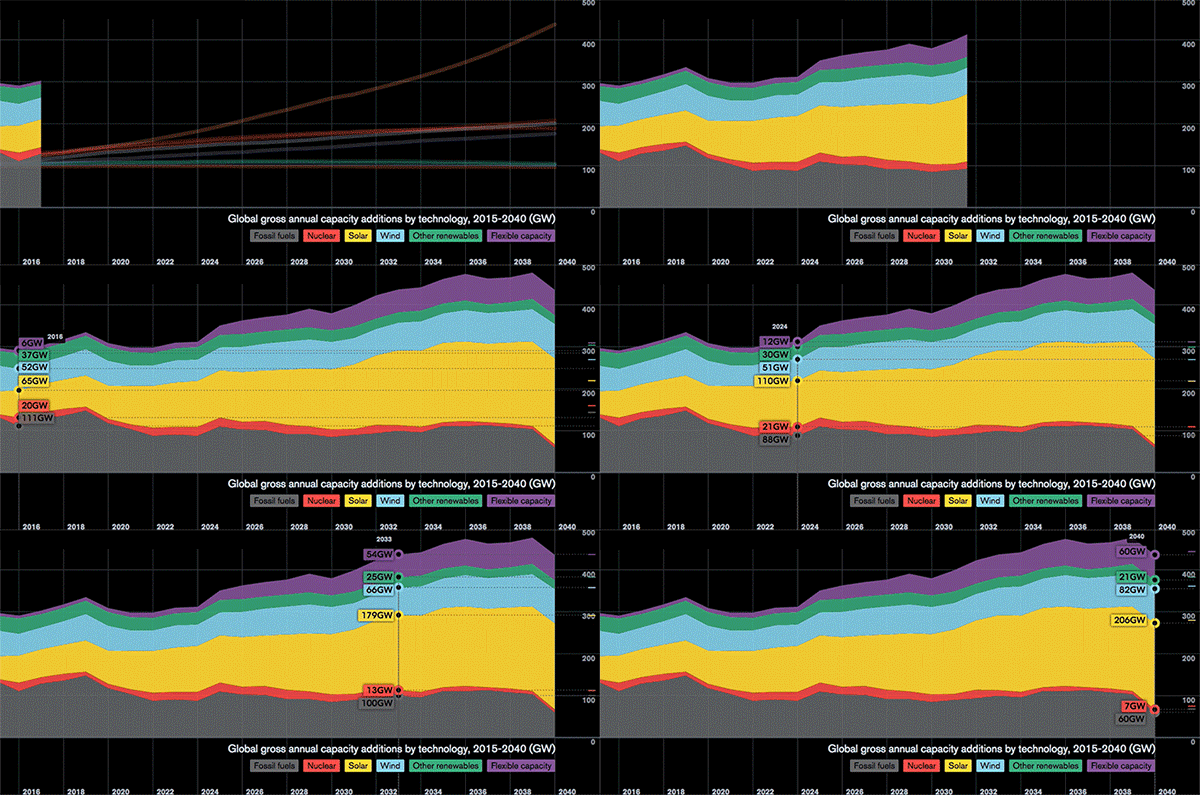
Power generating capacity additions by source.
Credit: Bloomberg NEF
Breaking it down by region also reveals a clear leader in terms of where the money will be spent. The Asia-Pacific region, which includes the rapidly growing economies of China and India, will receive most of the investments and most of the power generation gains will come thanks renewables. China alone will see $3.4 trillion worth of investments.
2. Renewables will account for nearly 60 percent of new generating capacity
The world’s power generating capacity will more than double by 2040. Of the new additional power generation to come online, 60 percent will come in the form of renewables.
Fossil fuels currently account for roughly two-thirds of all power generating capacity with renewables and nuclear making up the rest. The rapid rise of renewables will essentially flip the script and fossil fuels will only account for a third of world’s power generating capacity. Solar and wind will account for 26 percent and 14 percent respectively, up from a measly 2 percent and 5 percent in the present.
The U.S. is forecast to see a continued bump in natural gas capacity through 2020 thanks to its cheap, abundant nature. However, gas will lose its price edge to renewables, and with it, its market share, shortly thereafter.
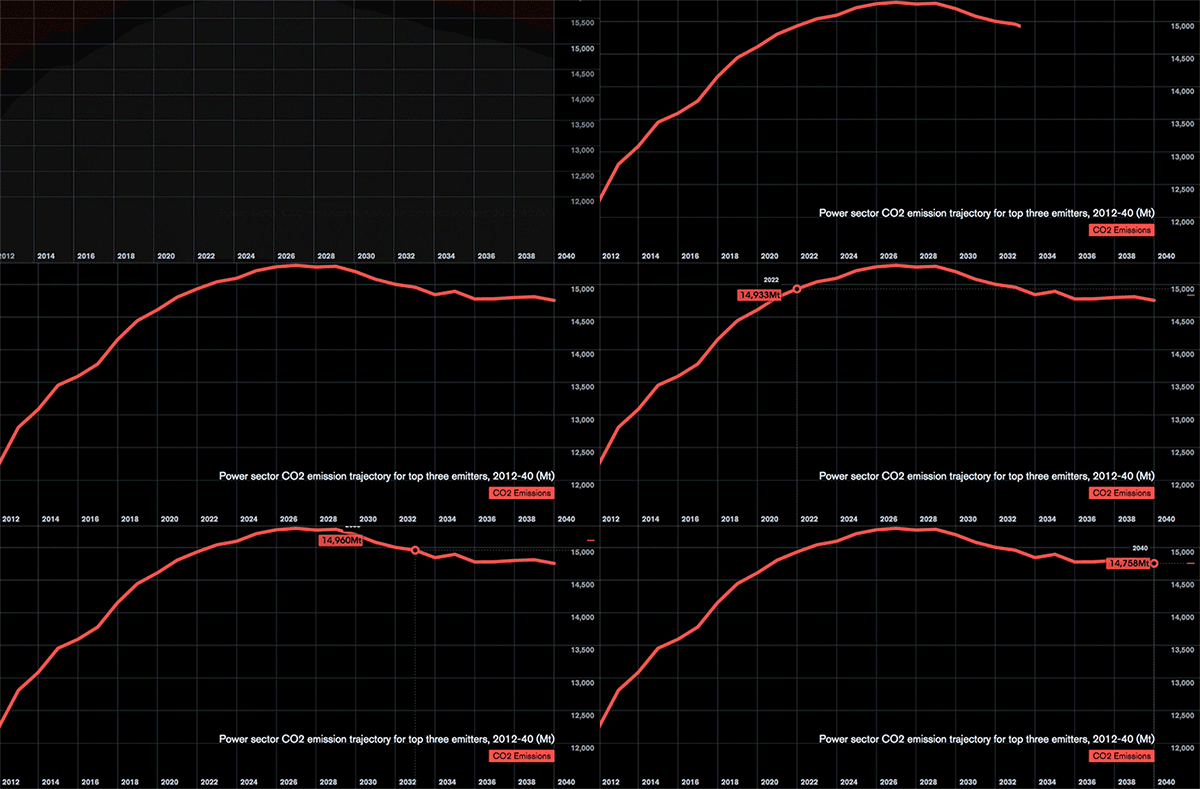
Carbon dioxide emissions from power generation.
Credit: Bloomberg NEF
3. 2026 will mark the transition to super cheap renewables
The road to remaking the world’s power generation will have two major mileposts. The first comes in 2026. That’s the year when Bloomberg analysts project wind will become the cheapest form of power generation in the world. Of course the world will actually be catching up to Brazil, the European Union and Australia, all places where wind is already the cheapest form of new power generation.
But wind’s reign will be short. By 2030, utility-scale solar photovoltaic cells—big arrays of panels, not the rooftop version—will take the title of cheapest new power source.
The trend of ever-cheaper renewables is already underway. Solar power project costs have fallen a whopping 59 percent since 2009 while onshore wind costs have fallen 11.5 percent over that time.
Continued price drops and not any particular policy are what are likely to spur the widespread adoption of wind and solar, according to the new Bloomberg report.
Greenhouse gas emissions from power generation could peak by 2029 and decline slightly thereafter. However, they’ll still be 13 percent above current levels meaning there’s still more work to be done to address the root causes of climate change.
This article is reproduced with permission from Climate Central. The article was first published on June 25, 2015.