
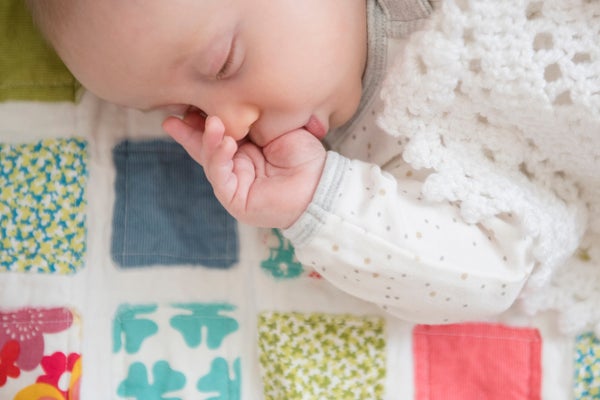
Young children who suck their thumbs or bite their nails may be less likely to develop allergies later in childhood, according to a new study that spanned three decades.
Although the results do not suggest that kids should take up these habits, the findings do suggest the habits help protect against allergies that persists into adulthood, the researchers said.
"Many parents discourage these habits, and we do not have enough evidence to [advise they] change this," said Dr. Robert Hancox, an associate professor of respiratory epidemiology at the University of Otago in New Zealand. "We certainly don't recommend encouraging nail-biting or thumb-sucking, but perhaps if a child has one of these habits and [it] is difficult [for them] to stop, there is some consolation in the knowledge that it might reduce their risk of allergies."
On supporting science journalism
If you're enjoying this article, consider supporting our award-winning journalism by subscribing. By purchasing a subscription you are helping to ensure the future of impactful stories about the discoveries and ideas shaping our world today.
In the study, the researchers pulled data from an ongoing study of more than 1,000 children born in New Zealand in 1972 or 1973. The children's parents were asked about their kids' thumb-sucking and nail-biting habits four times: when the kids were 5, 7, 9 and 11 years old. Researchers also tested the children for allergies using a skin-prick test when they were 13, and then followed up with the kids again when they were 32.
It turned out that 38 percent of the children who had sucked their thumbs or bit their nails had at least one allergy, whereas among kids who did not have these habits, 49 percent had at least one allergy. [Got Allergies? Avoid These 7 Mistakes]
Moreover, the link between these childhood habits and a lower risk of allergies was still present among the study participants when they were 32 years old. The link persisted even when the researchers took into account potentially confounding factors that may also affect a person's risk of allergies, such as whether their parents had allergies, whether they owned pets, whether they were breast-fed as infants and whether their parents smoked.
In addition, the researchers found that the kids who both sucked their thumbs and bit their nails at a young age were even less likely to have allergies at age 13, compared with kids who had just one of the two habits. However, this association was no longer found when the participants were 32 years old, according to the findings, published today (July 11) in the journal Pediatrics.
The new results are in line with the findings of another study, published in 2013 in the same journal, which found that children whose mothers sucked the kids' pacifiers clean had a lower risk of developing allergies. "Although the mechanism and age of exposure [to pathogens] are different, both studies suggest that the immune response and risk of allergies may be influenced by exposure to oral bacteria or other microbes," the researchers wrote in the new study. [7 Strategies for Outdoor Lovers with Seasonal Allergies]
The new findings also lend support the so-called hygiene hypothesis, which holds that environments that have too little dirt and germs may make children more susceptible to certain conditions, including allergies. It seems that "exposure to microbial organisms influences our immune system and makes us less likely to develop allergies," Hancox told Live Science.
Copyright 2016 LiveScience.com, a Purch company. All rights reserved. This material may not be published, broadcast, rewritten or redistributed.