
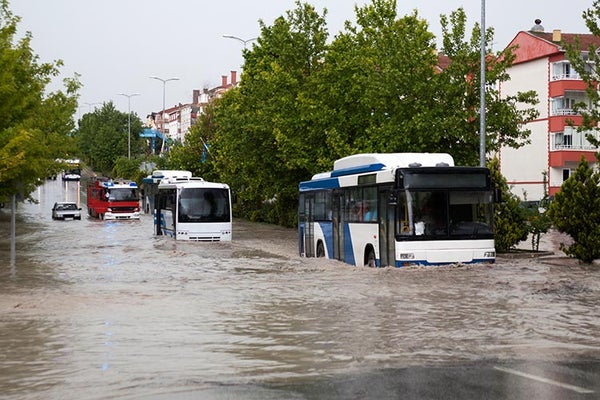
Dec 31 (Reuters) - Missouri, Illinois, Arkansas and eastern Oklahoma braced for more flooding on Thursday as rain-swollen rivers, some at record heights, overflowed their banks, washing out hundreds of structures, closing major highways and leaving thousands of people displaced from their homes.
Days of downpours from a winter storm that set off deadly tornadoes in Texas and significant snowfall in New England has pushed rivers in the U.S. Midwest to levels not seen in decades, the National Weather Service and local officials aid.
The flood has closed sections of Interstate 44 and Interstate 55, both major trucking routes, along with many local roads near rivers, the Missouri Department of Transportation said on Thursday.
On supporting science journalism
If you're enjoying this article, consider supporting our award-winning journalism by subscribing. By purchasing a subscription you are helping to ensure the future of impactful stories about the discoveries and ideas shaping our world today.
Freezing temperatures in the area in the coming days will cause some flooded areas in Missouri and Illinois to turn icy, adding to challenges, forecasters said.
At least 27 people have died in the region's flooding since the weekend, mostly from driving into flooded areas after storms dropped up to 12 inches (30 cm) of rain, officials said.
Flooding has destroyed hundreds of homes and businesses and overflowing rivers could menace Southern states as the water moves downstream toward the Gulf of Mexico, the National Weather Service said.
"Floodwaters will move downstream over the next couple of weeks, with significant river flooding expected for the lower Mississippi into mid-January," the NWS said.
Water rose to the rooftops of some structures in Missouri towns. Governor Jay Nixon spoke with President Barack Obama on Wednesday and received a pledge of federal support.
Two rivers west of St. Louis crested at historic levels, flooding towns, disabling sewer plants and forcing hundreds of residents from their homes.
Some evacuees stayed with family or friends or went to hotels, while others found refuge in Red Cross shelters set up in the area.
Eureka, Missouri, Mayor Kevin Coffey said his town had not seen such bad flooding in 150 years and some of its oldest businesses have been damaged. He said about 2,000 people in Eureka were cut off due to flooded roads.
The Mississippi River, the third longest river in North America, is expected to crest in the next few days in Thebes, Illinois, at 47.5 feet, more than a foot and a half (46 cm) above the 1995 record, the National Weather Service said.
Several levees, including one along the Meramec River near St. Louis, were at risk of a breach, the St. Louis Post-Dispatch said. (Reporting by Victoria Cavaliere in Los Angeles and Mary Wisniewski in Chicago; Editing by Janet Lawrence and Bill Trott)
