
By Julie Steenhuysen
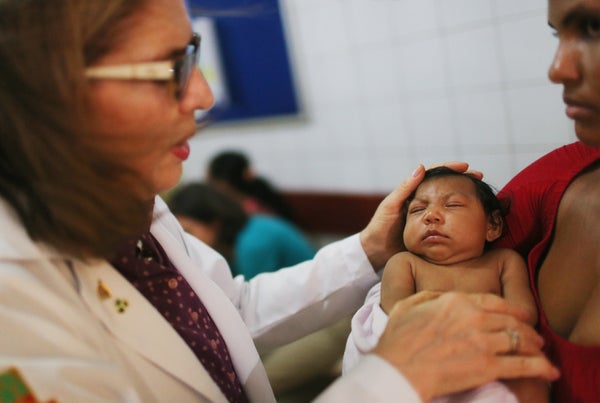
CHICAGO (Reuters) - U.S. health experts estimate that as many as 270 babies in Puerto Rico may be born with microcephaly caused by Zika infections in their mothers during pregnancy.
The estimate is the first to project the potential impact of Zika on Puerto Rico, a U.S. territory located in the Caribbean that has borne the brunt of the outbreak in the United States. Puerto Rico had 10,690 laboratory-confirmed cases of Zika, including 1,035 pregnant women, as of Aug. 12.
On supporting science journalism
If you're enjoying this article, consider supporting our award-winning journalism by subscribing. By purchasing a subscription you are helping to ensure the future of impactful stories about the discoveries and ideas shaping our world today.
Rising infection rates of the virus in Puerto Rico prompted the U.S. government to declare a state of public health emergency last week.
Using the most recent available data, researchers from the Puerto Rican Health Department and the U.S. Centers for Disease Control and Prevention forecast that between 5,900 and 10,300 pregnant women in Puerto Rico will become infected with Zika during the initial outbreak, which began in Puerto Rico in December 2015.
"Based on the limited available information on the risk of microcephaly, we estimate between 100 to 270 cases of microcephaly might occur" between mid-2016 and mid-2017, said Dr. Margaret Honein, chief of the birth defects branch at the CDC, who was one of several authors of the study published August 19 in JAMA Pediatrics.
Honein said the findings do not paint the entire picture of Zika, which has also been linked to a number of other birth defects, including various brain abnormalities, limb joint deformities, club foot, deafness and eye abnormalities.
"It's going to be very important to follow up on these infants," she said.
Honein said the CDC was working closely with the Puerto Rican Department of Health to reduce the incidence or mitigate the impact of Zika infection, particularly in pregnant women.
"I think it's critically important that we do everything we can to prevent Zika virus during pregnancy, and to minimize this very severe and devastating outcome."
Honein said while the study was based on an imperfect understanding of Zika and its impact on unborn children, she said it was important to release the data to help the country plan for the services that will be needed to care for the children born with microcephaly.
The condition, in which infants are born with abnormally small heads for their age, is estimated to cost $10 million over the lifetime of one child.
The connection between Zika and microcephaly first came to light last fall in Brazil, which has now confirmed more than 1,800 cases of microcephaly that it considers to be related to Zika infection in the mothers.