
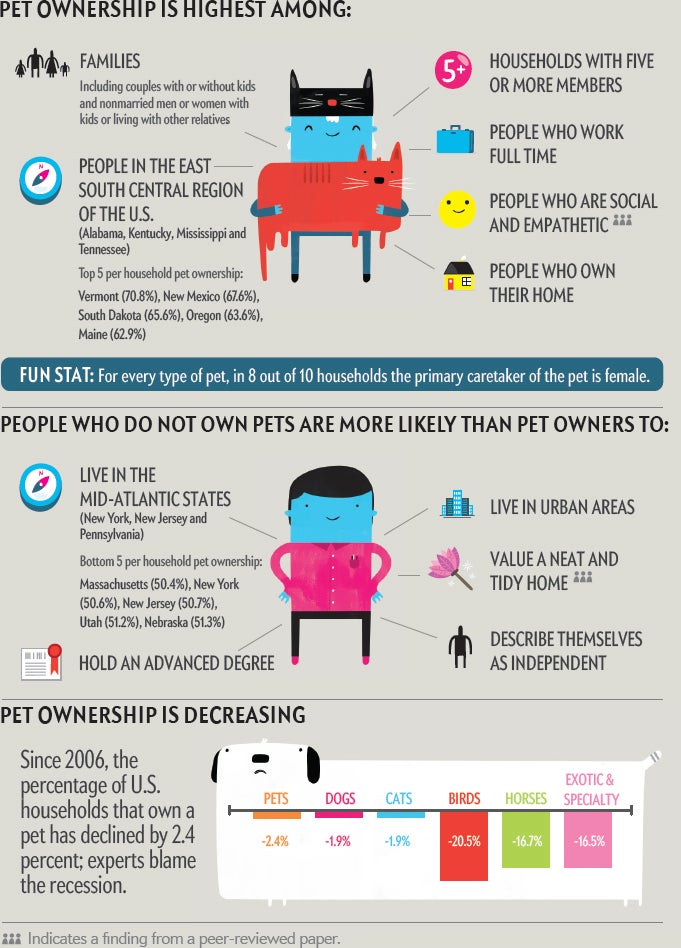
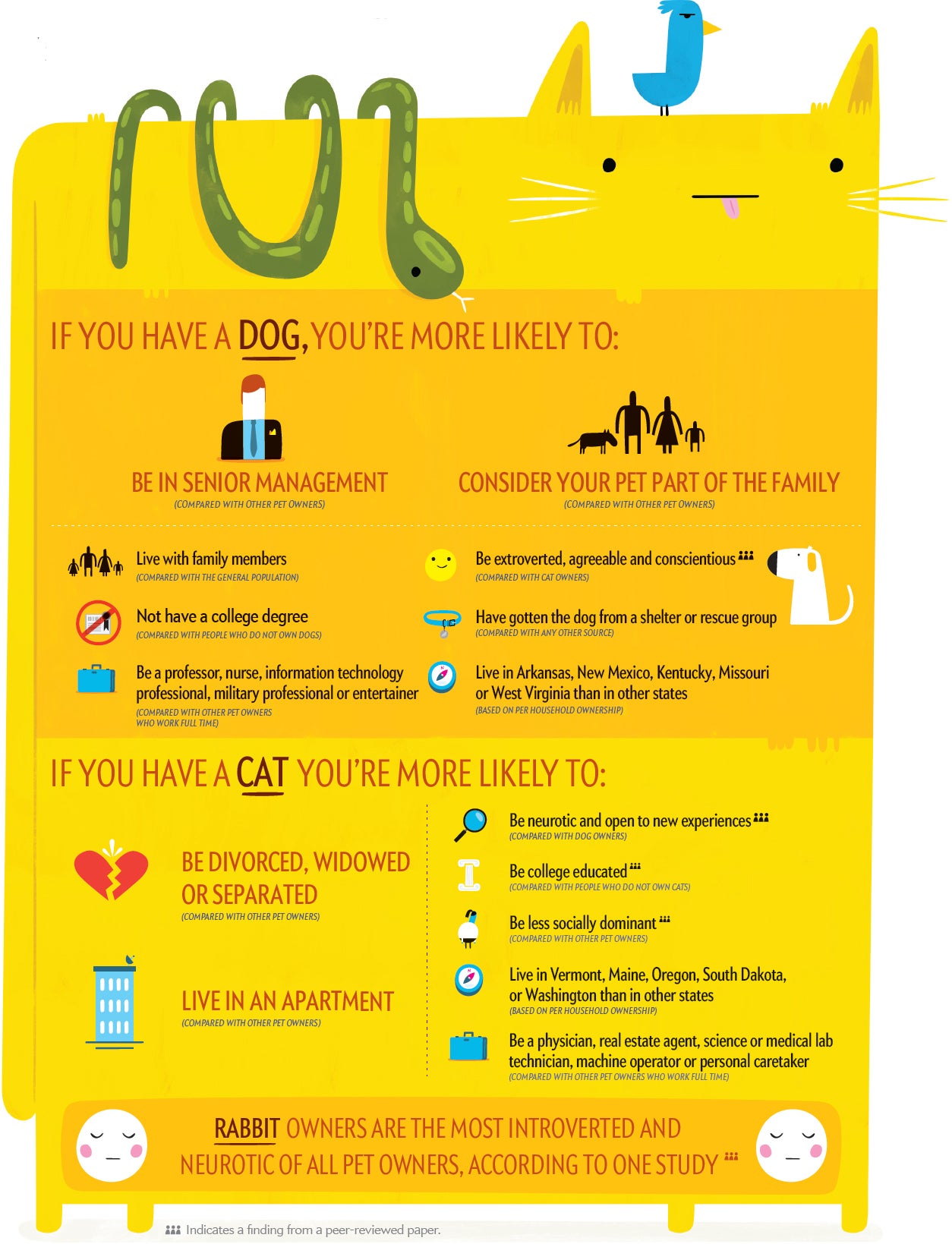
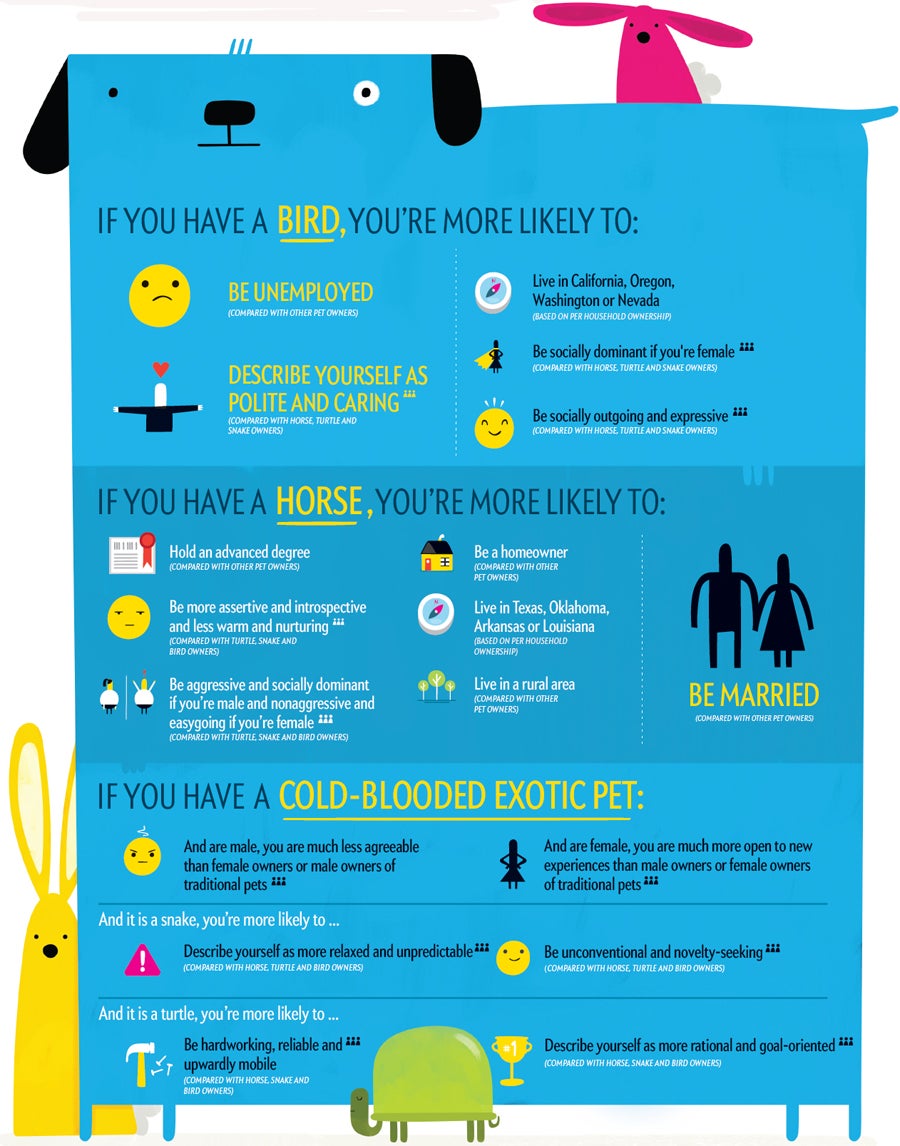
Most of us think our pets say a lot about who we are. Why else would we proudly proclaim our loyalty on T-shirts and in online profile pictures? Yet few scientists have rigorously investigated whether our choice of pet reveals anything about our personality, beliefs or lifestyle. Scientific American rounded up the smattering of available research and highlighted some of the more interesting findings in the infographic that starts below and continues on the next pages. Some information comes from peer-reviewed studies, but the bulk of the data derives from huge market surveys undertaken by interested parties in the pet industry, such as the American Veterinary Medical Association, which tracks pet populations, owner demographics and expenditures to follow how pet ownership in the U.S. changes over time. As you will see, these surveys reveal interesting things about people and the pets they love.
Shaw Nielsen
Shaw Nielsen
On supporting science journalism
If you're enjoying this article, consider supporting our award-winning journalism by subscribing. By purchasing a subscription you are helping to ensure the future of impactful stories about the discoveries and ideas shaping our world today.
Shaw Nielsen
And Now a Few Words from Pet Owners
Scientific American asked its readers to weigh in on their own pet predilections. More than 2,000 people responded to the online survey, and some results differed quite a bit from the data shown on the preceding pages. This is not surprising. Big surveys of many thousands of pet owners will show, for instance, that dog owners (on average) are somewhat more extroverted than cat owners (on average), but the individual differences within each group are greater than the differences between them. Thus, there are plenty of boisterous cat owners and reserved dog owners. In addition, many people have more than one type of pet and cannot be strictly labeled as partial to one particular creature.
Our survey drives home the fact—supported by several studies—that our animal companions are integral to how we see ourselves. For instance, men who like being seen as tough may get a tough-looking dog to help them project that image. Some people are proud rabbit or poodle owners because having those pets is a family tradition. Other folks might keep less popular critters, such as spiders or snakes, because they feel these animals are misunderstood, much like themselves.
We provide here some intriguing findings from readers who admire or have more than one type of pet and some data on how owners of specific animals describe themselves. Also, peruse the sampling of the hundreds of passionate responses we got to the question: What makes you a dog person, a cat person, neither or both? Visit our Web site (www.ScientificAmerican.com/Mind/pet-survey/) for more survey results.

Getty Images (sugar glider); istock.com (speech bubbles and animal icons)