
By Kate Kelland
LONDON (Reuters) - The World Health Organization (WHO) called on Friday for pilot projects to test two experimental ways to curb Zika-carrying mosquitoes, including testing the release of genetically modified insects and bacteria that stop their eggs hatching.
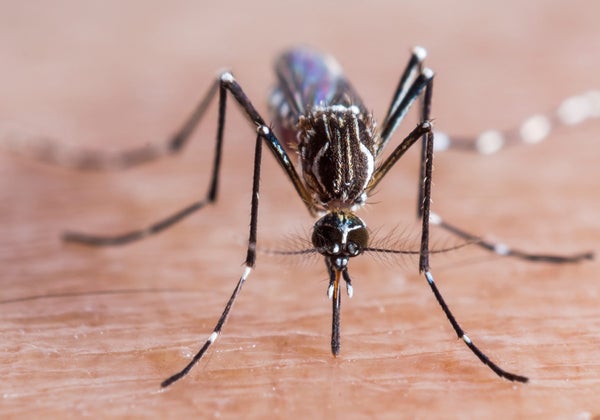
Zika virus, which is sweeping through the Americas, is transmitted primarily by the Aedes aegypti mosquito, which the U.N. health body has described as an "opportunistic and tenacious menace".
On supporting science journalism
If you're enjoying this article, consider supporting our award-winning journalism by subscribing. By purchasing a subscription you are helping to ensure the future of impactful stories about the discoveries and ideas shaping our world today.
Finding the most effective ways to control these mosquitoes could be a major boost to the fight against the disease, the WHO said in a statement.
After convening a meeting of its Vector Control Advisory Group (VCAG) earlier this week, the WHO said its specialists had reviewed five potential new weapons against Aedes mosquitoes.
Three - including sterile insect technique, vector traps and toxic sugar baits to attract and kill mosquitoes - were still too experimental to consider for scaled-up pilot projects, the WHO said.
But a further two - releasing mosquitoes carrying Wolbachia bacteria, and using genetically modified, or transgenic, male mosquitoes to suppress the wild population - "warrant time-limited pilot deployment, accompanied by rigorous monitoring and evaluation".
The WHO in February declared the Zika virus an international public health emergency due to its association in Brazil with suspected cases of microcephaly in babies.
Brazil authorities have said they consider most of the cases of babies born with abnormally small heads to be related to Zika, though the link between the virus and the birth defects has not yet been scientifically established.
Brazil said on Friday the number of confirmed and suspected cases of microcephaly in Brazil associated with the Zika virus has risen to 5,131 from 4,976 a week earlier. Of these, the number of confirmed cases climbed to 863 from 745 a week earlier.
Transgenic mosquitoes developed by Oxitec, a British subsidiary of Intrexon, are genetically modified so their offspring will die before reaching adulthood and being able to reproduce.
Wolbachia bacteria, which do not infect humans, cause the eggs of female mosquitoes that mate with infected males to fail to hatch. Mosquitoes carrying Wolbachia have been shown to reduce transmission of dengue fever, another mosquito-borne disease.