
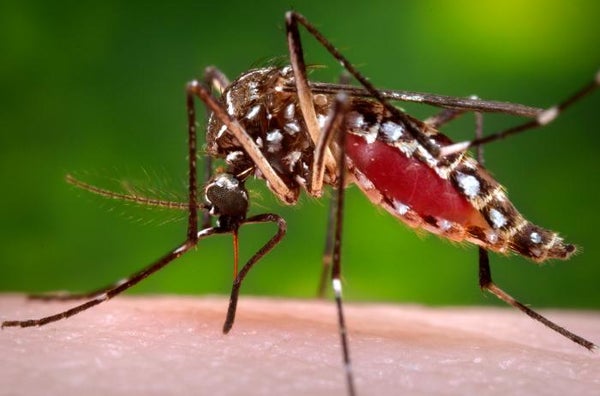
Zika, the mosquito-borne illness snagging headlines for its links to tiny-headed babies and autoimmune disease, has managed to sicken at least 22 patients in the mainland U.S. since 2007. None of the cases, however, were domestically acquired, according to the U.S. Centers for Disease Control and Prevention.
A total of 14 Zika cases occurred before 2014, the CDC told Scientific American. Then, since 2015 “at least eight U.S. travelers have had positive Zika virus testing performed at CDC. However, CDC is still receiving specimens for Zika virus testing from returning U.S. travelers who became ill in 2015 or 2016,” the agency said, via e-mail.
Yesterday Harris County, Texas health officials confirmed the latest case of imported Zika—one patient who recently traveled to Latin America and subsequently exhibited characteristic symptoms including fever, rash and joint pain. Areas of Texas, like in some other states in the southern U.S., are home to two species of Aedes mosquitoes capable of transmitting Zika, but there are no cases of local transmission of the disease in the U.S. mainland so far.
On supporting science journalism
If you're enjoying this article, consider supporting our award-winning journalism by subscribing. By purchasing a subscription you are helping to ensure the future of impactful stories about the discoveries and ideas shaping our world today.

CDC National Center for Emerging Zoonotic and Infectious Diseases