

When a virus invades your cells, it kicks your immune machinery into motion. The first responders are signaling proteins, called interferons. "And they trigger downstream immune responses. So you can kind of think of them as the hormones of the immune system. They're triggered and then they stimulate a bunch of other immune responses that are more specific to that pathogen.” Michelle Baker, a comparative immunologist at the Australian Animal Health Laboratory.
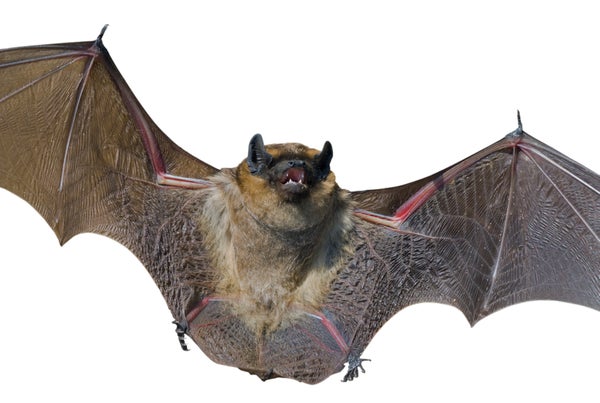
In the spirit of comparative immunology, Baker and her colleagues looked at how another mammal—the black flying fox, a type of bat—handles infections. They sequenced its immunity genes, and observed the immune response in normal bat cells. And they found that, unlike us—the bats always have interferons on patrol. Meaning the proteins do not wait to be activated by invaders. And the researchers say that this constant state of high alert may be why bats can carry Ebola, Nipah virus, and a whole lot of other infections with no symptoms at all. The findings appear in the Proceedings of the National Academy of Sciences. [Peng Zhou et al, Contraction of the type I IFN locus and unusual constitutive expression of IFN-α in bats]
So why not switch on those interferons 24/7 in humans? Well in us, they also tend to cause lots of inflammation and cell damage. Like the symptoms you feel from the flu—a lot of that is your immune system's fault. But the key might be to do as the bats do. "If we can just skew the response of our immune system so it triggers an antiviral response without the pro-inflammatory effects, then we might have something we can work with in terms of a novel therapeutic for humans." Bats have long been known to harbor disease. So it would be fitting if they also taught us how to fight it.
On supporting science journalism
If you're enjoying this article, consider supporting our award-winning journalism by subscribing. By purchasing a subscription you are helping to ensure the future of impactful stories about the discoveries and ideas shaping our world today.
—Christopher Intagliata
[The above text is a transcript of this podcast.]
