

At 14,505 feet, Mount Whitney towers over California's Sierra Nevada range. It's the tallest peak in the lower 48—which means it attracts thousands of weekend warriors every year—or make that weakened warriors. You see them staggering along the narrow, rocky trail, huffing for air, dizzy and exhausted from the low oxygen levels at high elevation. And once they're sick?
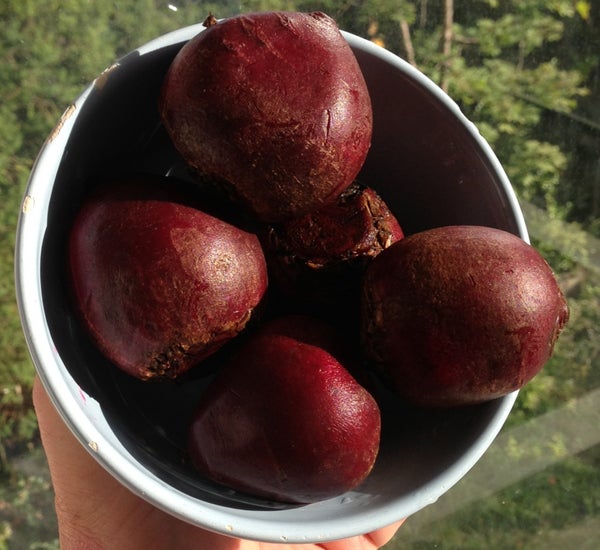
"The best medicine is to go down. That's actually the only cure that works." Svein Gaustad, a physiologist at the Norwegian University of Science and Technology. He says previous studies suggest blood vessels tend to contract at high altitudes. Possibly because they need oxygen to relax—exactly what's in short supply on mountaintops. But there may be a dietary way to get more oxygen to your blood vessels: in the form of beet juice. The juice contains nitrate, which the body converts to nitric oxide, the compound that keeps arteries limber.
Gaustad and his colleagues tested that theory during a trek in Nepal, at 12,000 feet. Eight volunteers alternately drank shots of regular beet juice, and another day, beet juice with the nitrates stripped out. A few hours later, the researchers measured blood flow and artery diameters with ultrasound. And they found that the regular beet juice did indeed restore blood vessels back to their low-elevation flexibility, whereas the nitrate-stripped juice did not. The results are in the journal Nitric Oxide. [Emily Bakker et al, Acute dietary nitrate supplementation improves arterial endothelial function at high altitude: A double-blinded randomized controlled crossover study]
On supporting science journalism
If you're enjoying this article, consider supporting our award-winning journalism by subscribing. By purchasing a subscription you are helping to ensure the future of impactful stories about the discoveries and ideas shaping our world today.
Gaustad says better vascular function has the potential to deliver more blood—and therefore more oxygen—to tired muscles. But they still don't know if that translates to better performance at altitude. And, he says, beets won't hurt, but they're no substitute for proper acclimatization. "If I had a bottle of beets around I would take it for sure. But that won't bring you to Mount Everest just by drinking beetroot."
—Christopher Intagliata
[The above text is a transcript of this podcast.]
