
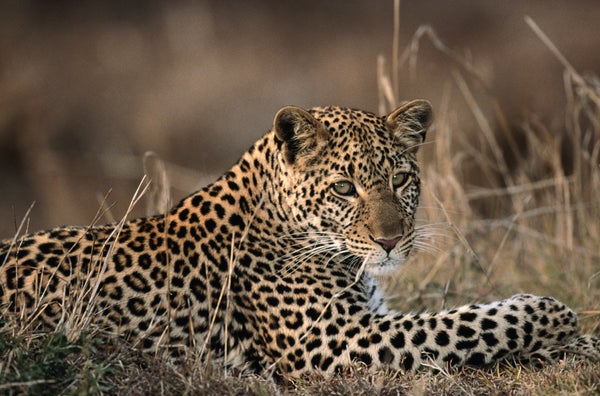

“In India, as a consequence of stricter protection of wildlife and increased tolerance, numbers of large carnivores are increasing in private lands and lands outside the protected-area systems.” Ullas Karanth of the U.S.-based Wildlife Conservation Society and India’s Centre for Wildlife Studies.
“While this is a good thing for conservation it poses serious problems for management because occasionally these interactions turn hostile, between people and carnivores. And this issue is particularly serious with leopards.”
Karanth and his team studied interactions between people and leopards in Karnataka, a state in India’s southwest that’s home to more than 60 million people. Leopards can be found in 47 percent of the state, in areas outside parks and other sanctuaries. So people and leopards do, every once in a while, run into each other.
On supporting science journalism
If you're enjoying this article, consider supporting our award-winning journalism by subscribing. By purchasing a subscription you are helping to ensure the future of impactful stories about the discoveries and ideas shaping our world today.
To gauge the frequency of such interactions, the researchers scoured media reports during a 14-month period from 2013 to 2014. The total tally was 245 separate incidents. Most were attacks on livestock or simple sightings of the leopards by people. But leopards did attack people 32 times, causing three deaths. Thirty-four leopards died in the study period, mostly from poaching and being hit by vehicles. Capturing and relocating the animals did not seem to be an effective way to cut down on animal-human contacts. The study is in the journal PLoS ONE. [Vidya Athreya et al, Spotted in the News: Using Media Reports to Examine Leopard Distribution, Depredation, and Management Practices outside Protected Areas in Southern India]
So how can the large carnivores and people better coexist? The researchers think that an obvious but important step is to get a lot more data on just where leopards are most likely to be found in populated areas, so people can avoid the cats. And that farmers should be quickly and fairly compensated for any livestock losses. Which seems to be a better alternative than trying to hunt down and kill or move the offending animal.
—Steve Mirsky
[The above text is a transcript of this podcast.]
