

In Africa's battle against malaria, two low-tech tactics—insecticides and bed nets—have done a decent job killing off mosquitoes. "But it's mainly one species that's been affected. That's a species called Anopheles gambiae, sometimes called the African malaria mosquito.” Rickard Ignell, a chemical ecologist at the Swedish University of Agricultural Sciences.
He says, despite that success, the problem is far from solved. For one, mosquitoes are developing resistance to insecticides. And two, there are many other species that can spread the disease. Including one that's common in the horn of Africa: Anopheles arabiensis.
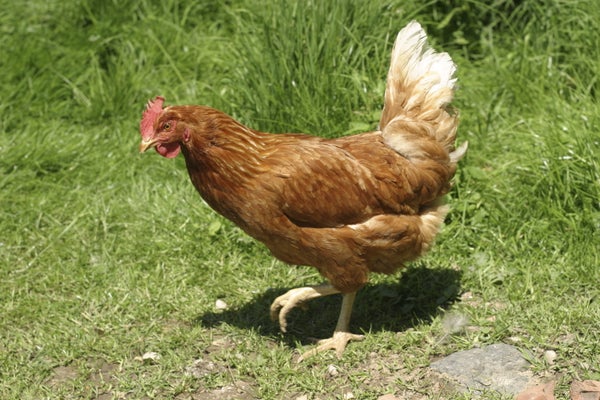
Unlike the pickier gambiae, its palate is wide-ranging. Arabiensis sucks the blood of cattle, sheep, goats. But… not chickens. "First of all, chickens like mosquitoes. So they'll actively feed on mosquitoes and other insects. So avoiding chickens could be a way of surviving, and evolving a way of smelling the chickens could be an early warning system for them."
On supporting science journalism
If you're enjoying this article, consider supporting our award-winning journalism by subscribing. By purchasing a subscription you are helping to ensure the future of impactful stories about the discoveries and ideas shaping our world today.
And it turns out, that aversion to chickens can be used against the insects. Ignell and his colleagues isolated chemical compounds from chicken feathers, and dispensed them next to a human sleeping under a bed net—a human lure. And they found that fewer mosquitoes came round for a snack, due to the repellent chemicals. The findings appear in the Malaria Journal. [Kassahun T. Jaleta et al., Chicken volatiles repel host-seeking malaria mosquitoes]
Ignell says this chicken cologne won't be immediately available. "Ideally the world would be like that, that we could bottle it up and send it off and they don't have to pay anything. But that's not the case obviously." Luckily, there's an equally effective substitute. "We can actually reduce the number of mosquitoes indoors by just using a chicken. So that's probably the cheapest option."
—Christopher Intagliata
[The above text is a transcript of this podcast.]
