
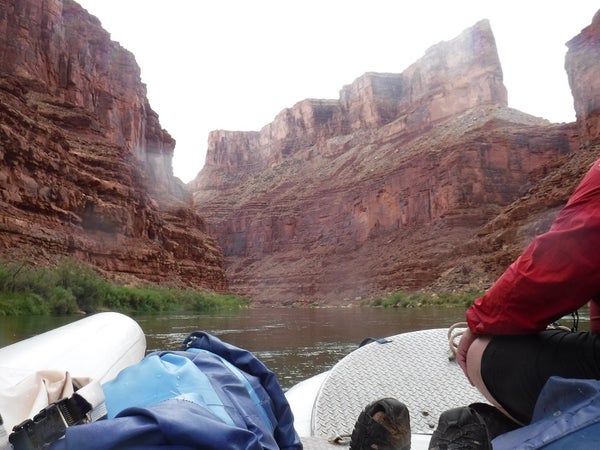

“So what does rafting down the Grand Canyon have to do with science education?”
Ann Reid, former research biologist and current executive director of the National Center for Science Education. She spoke to me July 7th at the Fern Glen Canyon campsite the morning of our penultimate day rafting down the Colorado River in the Grand Canyon.
“Well, for NCSE it’s one of the most powerful places on the Earth to show the differences between religious thinking and scientific thinking. Because for a very small minority of Christians who believe the Earth is 6,000 years old, the Grand Canyon is the best evidence they have of Noah’s flood.”
On supporting science journalism
If you're enjoying this article, consider supporting our award-winning journalism by subscribing. By purchasing a subscription you are helping to ensure the future of impactful stories about the discoveries and ideas shaping our world today.
Creationists run multiple raft trips down the Colorado each year. A Web site touting some says the trips “will encourage your faith as we reveal the truth of God’s creation found in this gigantic remnant of the Biblical Flood.” Which creationists believe occurred some 4,400 years ago.
“And of course scientists of all, many, many different subdisciplines have figured out that the canyon is much older than that, there’s the rocks, there’s the biology, there’s the hydrology, it’s just a fantastic place to learn how scientists explain the world around us.”
The annual NCSE Colorado River trip holds about two dozen guests and features talks by a geologist and an evolutionary biologist. This year, two public school teachers received all-expense paid scholarship trips so they could bring their experiences and learning back to the classroom. And I recorded lots more audio, which I’ll be posting as Scientific American Science Talk podcasts in the coming weeks.
—Steve Mirsky
[The above text is a transcript of this podcast.]
