
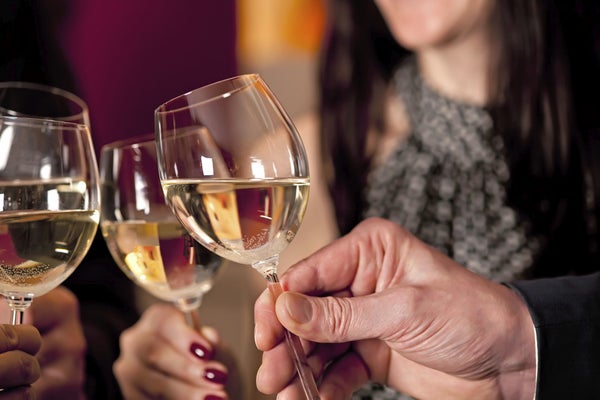

When it comes to wine, the concept of "terroir" is sort of a nebulous thing. Terroir is sometimes translated as the wine’s character. Here's how my friend Valerie, a wine importer, explained it: "I would say terroir is a specific set of natural elements that all come together in harmony to produce a very specific outcome. The soil, the exposure to the sun, the drainage, the proximity to water, the fog, all of these things, they all come together in an expression that we find beautifully in the grape."
Some of those factors might be hard to measure. But here's a new one that might contribute a quantifiable essence to terroir: the grapes' microbiome. "It certainly could be that the "house microbiome" influences the wines in overt or subtle ways that we don't understand yet." David Mills, a microbiologist at U.C. Davis. Mills worked with the Far Niente and Nickel & Nickel wineries in California’s Napa Valley. The winemakers took five samples of Chardonnay and Cabernet Sauvignon fermentations as the juice transformed to wine. Then Mills and his colleagues ran microbial and chemical tests on those time-dependent samples.
They found that the bacterial and fungal species on the grapes corresponded to a certain chemical fingerprint—a mix of metabolites—in the finished wines. "And we also were able to use this to predict and make a model, where we might be able to predict the kind of metabolites that show up in a wine." They did not do sensory tests in this study—no smelling or tasting. But along with past research, the findings suggest that microbes do affect the wines’ terroir. The study appears in the journal mBio. [Nicholas A. Bokulich et al., Associations among Wine Grape Microbiome, Metabolome, and Fermentation Behavior Suggest Microbial Contribution to Regional Wine Characteristics]
On supporting science journalism
If you're enjoying this article, consider supporting our award-winning journalism by subscribing. By purchasing a subscription you are helping to ensure the future of impactful stories about the discoveries and ideas shaping our world today.
Mills says microbes could help winemakers differentiate their wines from competitors'…and diagnose trouble before fermentation even begins. "I mean I can imagine a winemaker would want to know at the start of their fermentations, is it a good microbiota year or is it a not so good microbiota year? And maybe they can change their winemaking practice accordingly." While we wine drinkers raise a glass to those terroir-forming microbes.
—Christopher Intagliata
[The above text is a transcript of this podcast.]
