
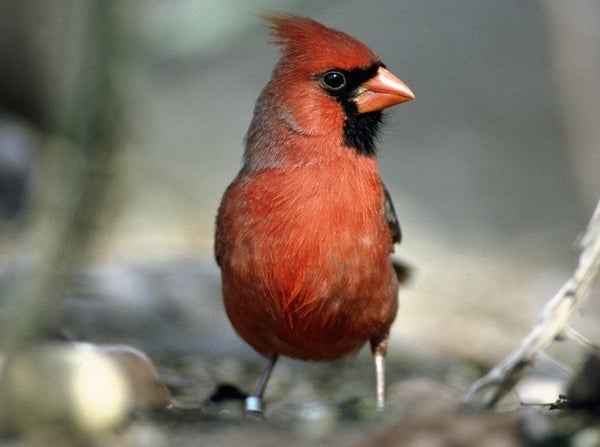

The redder, the better. And I’m not talking about beets, roses or presidential candidates. I’m talking birds. Well, some birds. In various species, red coloration in a male’s feathers or beak is an indication of fitness. A splash of red can attract a mate or warn off a rival.
Now two teams of researchers have determined the chemistry that allows our flamboyantly feathered friends to cloak themselves in crimson. Bottom line: many birds eat plants that are rich in compounds with a distinctive yellow pigmentation—which some birds can modify chemically to form the red pigment that becomes their calling card.
To tease out the details, the scientists compared birds that can make the red compounds with those that can’t.
On supporting science journalism
If you're enjoying this article, consider supporting our award-winning journalism by subscribing. By purchasing a subscription you are helping to ensure the future of impactful stories about the discoveries and ideas shaping our world today.
The first team studied the red canary, which was created about a century ago by breeders who crossed the more familiar yellow canary with a bird called a red siskin. The researchers combed through the genomes of all three kinds of birds to see whether red canaries got any reddening genes from the siskin side—genes that their yellow brethren lack.
Their search pointed them to a member of the cytochrome P450 family. These are enzymes that are often involved in breaking down toxins. The particular enzyme for turning yellow to red was at levels a thousand times higher in the skin of red canaries compared to their yellow fellows. [Ricardo J. Lopes et al., Genetic Basis for Red Coloration in Birds]
The second research team arrived at a similar conclusion based on studies of zebra finches. Most zebra finches have a bright orange-to-red beak. But one kind of mutant zebra finch has a yellow beak.
Turns out that these yellow-beaked birds have multiple mutations in and around their P450 genes. Which pretty much cut the yellow-to-red enzyme levels in their beaks down to zero. The findings can be read in the journal Current Biology. [Nicholas I. Mundy et al., Red Carotenoid Coloration in the Zebra Finch Is Controlled by a Cytochrome P450 Gene Cluster]
Interestingly, many birds that are not red still have cytochrome P450 genes—to make red pigments in the retina that enhance their color vision. If they could somehow activate this enzyme in other parts of their bodies, they might both see well and look even better. Or maybe just redder.
—Karen Hopkin
[The above text is a transcript of this podcast.]

