
The SciencesJuly 1, 2014
How Many Cell Phones Does It Take to Arouse a Supreme Court Justice’s Suspicion?
Do you promise to tell the truth on however many phones you carry?
Computers, databases and networks have connected us like never before, but at what cost?
How Many Cell Phones Does It Take to Arouse a Supreme Court Justice’s Suspicion?
Do you promise to tell the truth on however many phones you carry?
How to Disappear from the Web
If you've ever been the victim of identity theft, or a stalker, or you just value your privacy, Tech Talker has the tools to help you ditch the digital age and remove your presence from the web.
How To Reconcile Big Data and Privacy
In many ways "big data" and "encryption" are antithetical. The former involves harvesting, storing and analyzing information to reveal patterns that researchers, law enforcement and industry can use to their benefit.
Biometric Security Poses Huge Privacy Risks
Without explicit safeguards, your personal biometric data are destined for a government database
California Tables Plans for RF Enhanced Driver's License
EDLs contain a RFID chip and let you rapidly reenter the U.S. at a land border without needing a passport. Proponents in California want to alleviate congestion at the Mexico border. Opponents worry about privacy. Larry Greenemeier reports
A Survey Asks: How Much Does Your Privacy Online Matter?
Is online anonymity important to you? How far are you willing to go to protect your privacy? These two the key questions are examined in a report released Thursday by the Pew Research Center’s Internet & American Life Project.
Protecting Your Privates: 5 Techniques for Maintaining Web Confidentiality
There are ways to protect personal information while still enjoying much of what the Web has to offer
Secure E-mail Services Shuttered over Fears of Government PRISM Reprisals
Revelations of the U.S. National Security Agency’s PRISM program continue to have worldwide ripple effects. Nearly two months after U.S. federal prosecutors charged NSA whistleblower Edward Snowden with espionage and theft of government property for blowing the lid off of the clandestine surveillance program, the company that secured Snowden’s electronic communications with journalists and international [...]
Fact or Fiction: Encryption Prevents Digital Eavesdropping
There are effective ways to encrypt data, whether it is in transit or in storage, but if that data is left in the clear at any point along its path, it is vulnerable to theft or tampering
Wiretaps through Software Hacks to Get Legal Scrutiny
Should the FBI be able to break into private electronic communications via existing software vulnerabilities?
6-Month-Old E-Mails Easy Pickings for Police
The outdated 1986 Electronic Communications Privacy Act considers e-mail "abandoned" and searchable if it's stored for more than 180 days on a server. Larry Greenemeier reports
Fashion Statement: Designer Creates Line of Drone-Proof Garments to Protect Privacy
As debate over the use of unmanned aerial vehicles in the U.S. rages on, a fashion designer introduces clothing that blocks drone-mounted infrared cameras
Does a Public “Find My iPhone” Search Violate Personal Privacy?
A guy stole my iPhone. I tracked it and posted his address online. Was that wrong?
Protect Privacy When Recycling Smart Phones
A factory reset may not be enough to wipe the data from a smart phone you're planning to recycle. Larry Greenemeier reports
California Considers DNA Privacy Law
If passed, such a law would have a costly and damaging effect on research
Who's Watching You: The Future of Privacy
Scientific American editor in chief, John Rennie, discusses the future of privacy and security, the subject of the September single-topic issue of Scientific American magazine. Plus, we'll test your knowledge of some recent science in the news. Web sites mentioned in this episode include www.SciAm.com/sciammag; www.snipurl.com/sciamfootball
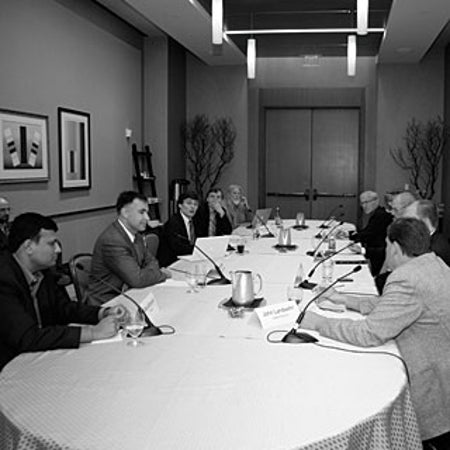
Industry Roundtable: Experts Discuss Improving Online Security
Experts from Sun, Adobe, Microsoft and MacAfee discuss how to protect against more numerous and sophisticated attacks by hackers; security professionals call for upgraded technology, along with more attention to human and legal factors
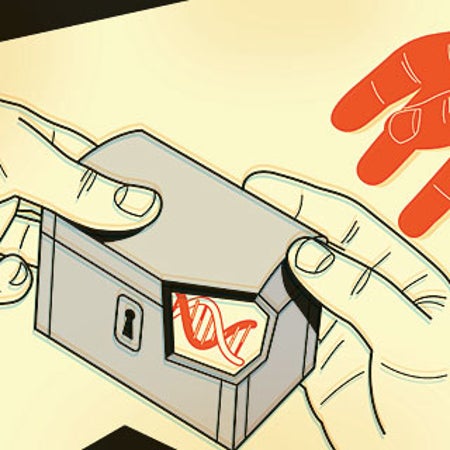
Tougher Laws Needed to Protect Your Genetic Privacy
In spite of recent legislation, tougher laws are needed to prevent insurers and employers from discriminating on the basis of genetic tests
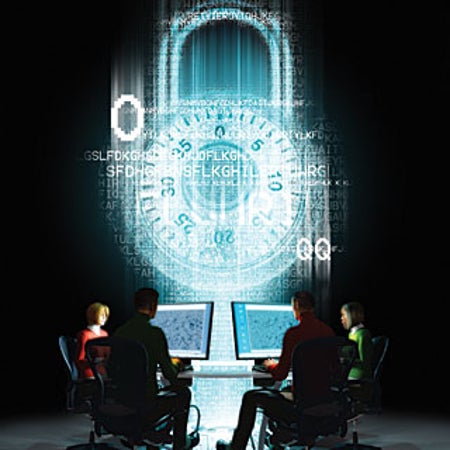
Cryptography: How to Keep Your Secrets Safe
A versatile assortment of computational techniques can protect the privacy of your information and online activities to essentially any degree and nuance you desire

How Loss of Privacy May Mean Loss of Security
Many issues posing as questions of privacy can turn out to be matters of security, health policy, insurance or self-presentation. It is useful to clarify those issues before focusing on privacy itself
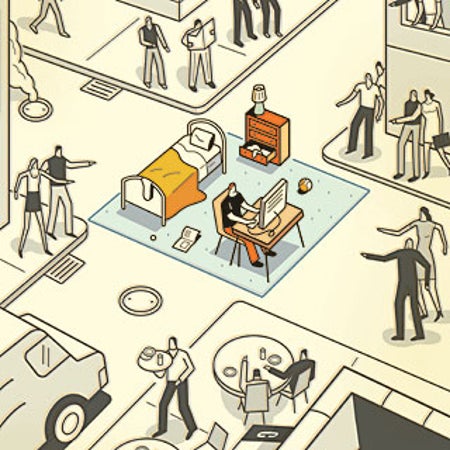
Do Social Networks Bring the End of Privacy?
Young people share the most intimate details of personal life on social-networking Web sites, such as MySpace and Facebook, portending a realignment of the public and the private

Digital Surveillance: Tools of the Spy Trade
Night-vision cameras, biometric sensors and other gadgets already give snoops access to private spaces. Coming soon: palm-size "bug-bots"
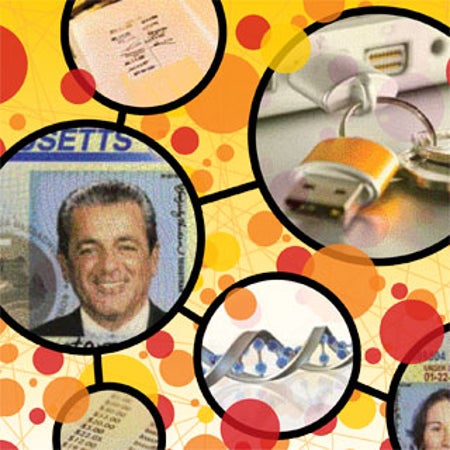
Data Fusion: The Ups and Downs of All-Encompassing Digital Profiles
Mashing everyone's personal data, from credit card bills to cell phone logs, into one all-encompassing digital dossier is the stuff of an Orwellian nightmare. But it is not as easy as most people assume

Beyond Fingerprinting: Is Biometrics the Best Bet for Fighting Identity Theft?
Security systems based on anatomical and behavioral characteristics may offer the best defense against identity theft