-
Observations
National Robotics Week to highlight the past, present and future of robot research
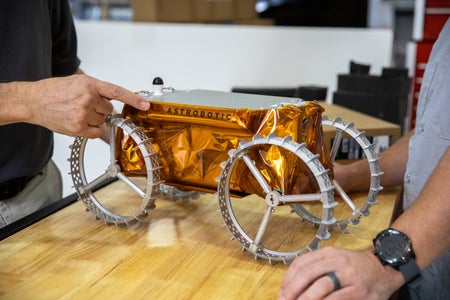
More than eight decades after Westinghouse Electric Corp. introduced Televox —a crudely conceived humanoid that could answer the telephone and route calls—robots finally have a week out of the year that they can call their own.
-
Expeditions
Welcome to Atlantis and the quest for nitrogen
-
News
Street Smarts: The BioBus Brings a Rolling Science Lab to Resource-Strapped Schools
The Cell Motion BioBus, a high-tech, carbon-neutral laboratory housed in a retrofitted transit bus brings science education to deprived schools, and the hands-on excitement of the lab to students -
Scientific American Magazine
Recommended: Gems and Gemstones
Books and recommendations from Scientific American -
Scientific American Magazine
Fixing the Broken Government Policy Process
Greater transparency and limits on lobbyist influence would promote better long-range strategies
Scientific American launches "World Changing Ideas" video contest
Video Game Expands the Concept of Dark Energy for Mass Effect
Better Mileage Now--Improving the Combustion Engine
Greenhouse Bananas: Non-Science Smear Campaigns
The Neural Advantage of Speaking 2 Languages
Comparatively Easy: Why Research Is Needed for Health Care Reform
Group Thinker: Researcher Gets $2.9 Million to Further Develop Swarm Intelligence
Using Light and Genes to Probe the Brain
Calendar: MIND events in January and February
What Keeps Time Moving Forward? Blame It on the Big Bang
Bringing Science Policies to Clinical Psychology
Welcome to Atlantis and the quest for nitrogen
Street Smarts: The BioBus Brings a Rolling Science Lab to Resource-Strapped Schools
World Changing Ideas: 20 Ways to Build a Cleaner, Healthier, Smarter World
Recommended: Gems and Gemstones
What Keeps Time Moving Forward? Blame It on the Big Bang
Fixing the Broken Government Policy Process
Splitting Time from Space—New Quantum Theory Topples Einstein's Spacetime
The Neural Advantage of Speaking 2 Languages
Greenhouse Bananas: Non-Science Smear Campaigns
Engineered Mice Mimic Human Populations
Seven Answers to Climate Contrarian Nonsense
Scientific American Magazine
February 2010 Issue
Life from a Test Tube? The Real Promise of Synthetic Biology
Stopping Infections: The Art of Bacterial Warfare
100 Years Ago: The Flooding of Paris
Lost Giants: Disparate Clues in the Mammoth Extinction Debate
Engineered Mice Mimic Human Populations
Full Table of Contents | All IssuesScience Education Podcast
-
Cleopatra's Alexandria Treasures
click to enable
-
The Science Talk Quiz: "Totally Bogus"
click to enable
- Subscribe: RSS · iTunes · All Podcasts
Discussions in Science Education
- Most Commented
Street Smarts: The BioBus Brings a Rolling Science Lab to Resource-Strapped Schools | 10 comments - Most Recent Comment
at 04:58 PM by Sisko on
Street Smarts: The BioBus Brings a Rolling Science Lab to Resource-Strapped Schools
ALL SLIDESHOWS Science Education Slideshows
Science Education News from Our Partners
Science Education Archive
Subscription Center
Basic Science Newsletter
Get weekly coverage delivered to your inboxMORE TOPICSExplore Basic Science
Editor's Pick
-
Time to Ban Production of Nuclear Weapons MaterialA new global treaty that cuts off production of plutonium and highly enriched uranium for nuclear weapons could jump-start nuclear disarmament and help prevent proliferation
Latest Stories on ScientificAmerican.com
Observations
National Robotics Week to highlight the past, present and future of robot research
Greenwire
Energy Storage on Ice
Expeditions
How many scientists (and scientific instruments) does it take to sample seawater?
Extinction Countdown
Denial of global warming threat to the American pika means no protection from U.S.