5. Food

Getty Images

Join Our Community of Science Lovers!


On supporting science journalism

If you're enjoying this article, consider supporting our award-winning journalism by subscribing. By purchasing a subscription you are helping to ensure the future of impactful stories about the discoveries and ideas shaping our world today.


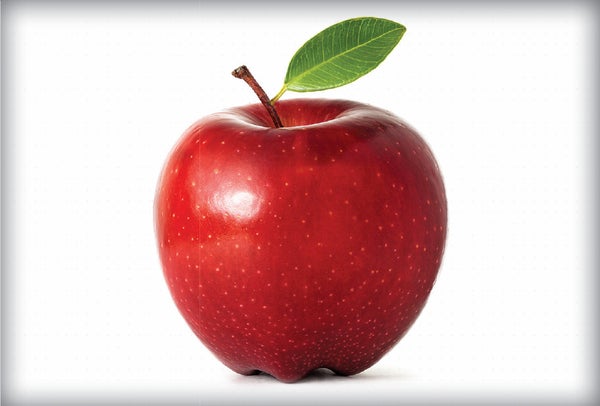
The human race has selectively bred crops to suit our needs for thousands of years. People have consumed as many as several trillion meals containing genetically modified (GM) ingredients over the past few decades. Not a single verified case of illness has ever been attributed to the genetic alterations. But skepticism surrounding GM crops remains-especially in European nations-and is a detriment to millions who might otherwise benefit from them. The perks of GM crops greatly outweigh the health risks, which so far remain theoretical, our authors say. In fact, more than 130 research findings over 25 years have shown that GM organisms are not more risky than other plant-breeding techniques. But ramping up agricultural output by an estimated 70 percent to feed an exploding global population most likely cannot rely on GM foods alone. New techniques are harnessing the power of the plant phytobiome to create foods that grow faster and resist pests and other environmental harms.

Read More:

SA Special Editions Vol 26 Issue 5sThis article was published with the title “5. Food” in SA Special Editions Vol. 26 No. 5s (), p. 75
doi:10.1038/scientificamerican122017-2LQt8QzWV1pGOyW75s1B36

It’s Time to Stand Up for Science

If you enjoyed this article, I’d like to ask for your support. Scientific American has served as an advocate for science and industry for 180 years, and right now may be the most critical moment in that two-century history.

I’ve been a Scientific American subscriber since I was 12 years old, and it helped shape the way I look at the world. SciAm always educates and delights me, and inspires a sense of awe for our vast, beautiful universe. I hope it does that for you, too.

If you subscribe to Scientific American, you help ensure that our coverage is centered on meaningful research and discovery; that we have the resources to report on the decisions that threaten labs across the U.S.; and that we support both budding and working scientists at a time when the value of science itself too often goes unrecognized.

In return, you get essential news, captivating podcasts, brilliant infographics, can't-miss newsletters, must-watch videos, challenging games, and the science world's best writing and reporting. You can even gift someone a subscription.

There has never been a more important time for us to stand up and show why science matters. I hope you’ll support us in that mission.

Thank you,

David M. Ewalt, Editor in Chief, Scientific American

Subscribe