
This time last year, the world was gripped by reports that an incoming, nearly 200-feet-wide asteroid had a tiny, tiny chance of hitting the Earth in 2032. The sigh of relief that we weren’t on course for a Don’t Look Up scenario was palpable when, upon closer inspection, astronomers determined that the space rock, named 2024 YR4, wouldn’t hit our planet after all.
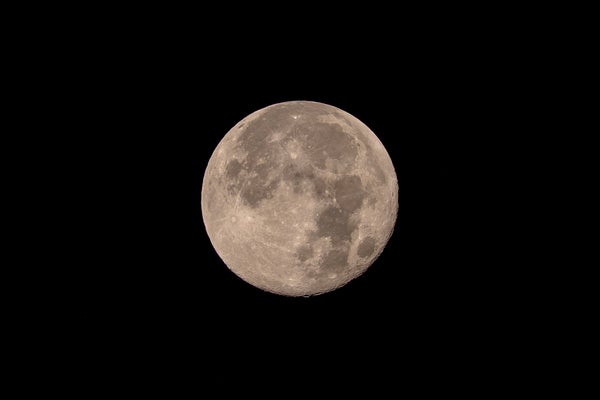
Instead, they calculated, it might hit the moon in 2032—with a probability of about 4 percent. And now scientists are sketching out a clearer picture of what such a collision might look like from Earth.
In a study that was recently posted on the preprint server arXiv.org and is yet to be peer-reviewed, astronomers found that if the asteroid does hit the moon, it will release an “optical flash” that will be visible from Earth, and hours of “infrared afterglow” will follow the impact. It would be the “most energetic lunar impact event ever recorded in human history,” they wrote.
On supporting science journalism
If you're enjoying this article, consider supporting our award-winning journalism by subscribing. By purchasing a subscription you are helping to ensure the future of impactful stories about the discoveries and ideas shaping our world today.
Scientists already knew this could be a doozy. Astronomers previously estimated that if 2024 YR4 hits the moon, it could form a crater about one kilometer wide and release some 100 million metric tons of material, some of which could reach Earth.
There is no guarantee such a collision will occur, but if it does, it will be historic.
“If this scenario plays out,” said Yixuan Wu, a researcher at Tsinghua University in China and an author of the paper, to Live Science, “it will be a milestone for planetary science, turning the Earth-Moon system into a grand stage for validating our understanding of asteroid impacts.”