
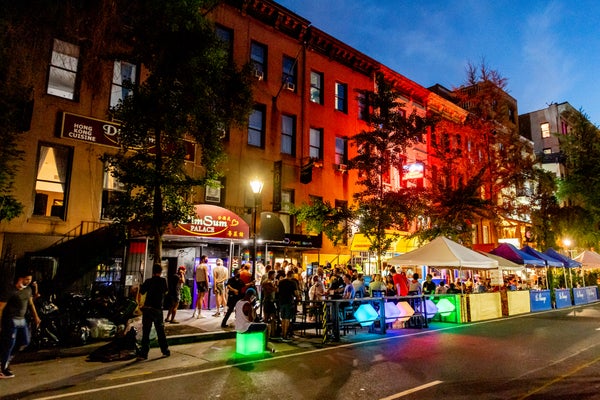
For three months, the COVID-19 pandemic did what nobody imagined possible: shut down the city that never sleeps. Businesses boarded up, public transport screeched to halt, and Times Square was quiet. Those weeks were emotionally and financially painful. But the drastic measures worked.
New York was the epicenter of the pandemic. Cases peaked at almost 12,000 in a dayin April, but with regulations and community buy-in, we flattened the curve.
But is not the time to become complacent or overconfident. With reports of several hundred new cases a day, it is only a matter of time before the city is hit with a new surge, and all the hard work New Yorkers committed to for weeks will be for naught.
On supporting science journalism
If you're enjoying this article, consider supporting our award-winning journalism by subscribing. By purchasing a subscription you are helping to ensure the future of impactful stories about the discoveries and ideas shaping our world today.
Other states like Arizona, Florida and Texas have just recorded single-day highs for COVID-19 cases after reopening early, and the United States as a country continues to break record highs. Some governors have now reversed their decisions to allow indoor dining and bar openings after realizing their mistake.
On July 1, New York chose to embrace the guidance of public health and medical professionals and paused the plan to re-open indoor dining. This was a smart decision in the best interest of New Yorkers. “Opening indoor dining [would have been] a terrible idea. We know that indoor or enclosed spaces are higher risk environments for transmission, and we have seen what happens when it is opened in other states,” says Angela Rasmussen, a Columbia University virologist.
Indoor dining is not the only activity New York should put on hold, however. University of Massachusetts Dartmouth biologist Erin Bromage wrote a comprehensive review of places that pose the highest risk of transmission. In addition to restaurants and bars, included in the list are workplaces, live performances, indoor sporting venues and birthday parties/funerals.
Slowing reopening plans isn’t an easy decision; business owners are hurting, and New Yorkers are aching for social contact. But we still need to be careful. Rasmussen notes, “New York City has worked hard to flatten the curve and reduce community transmission of SARS-CoV-2, but the virus is not gone from our community.”
New York is hastily reopening without any fundamental changes in the science surrounding this pandemic. There remains no effective treatment for severe COVID-19 infections, no prophylactic and no vaccine. Further, it has yet to be definitively shown that antibodies against the SARS-CoV-2 virus even offer long-term protection. Meanwhile, countless vaccines are being developed with no considerations of public access or distribution.
Reopening too early will put our most vulnerable at further risk. A disproportionate number of New York’s 22,000 deaths because of COVID-19 are Black, Indigenous and people of color. These communities risked their lives to deliver food and provide essential services. Reopening too early will continue to put vulnerable communities in harm’s way.
It is also becoming more evident that young people can be seriously affected. The median age of infection in Florida, for instance, is just 37. Younger children, too, are at risk; some 300 of them have been diagnosed with a dangerous inflammatory disease associated with SARS-Cov-2 infection. Given these risks, we need to be careful about how we open schools and universities, and we need to first work hard at reducing the overall rate of COVID-19 in the community.
Some may argue that we can reopen now since cases in New York State recently dipped to record low
s. However, a majority of states have seen a rising numbers of cases lately, and nationwide we are breaking records almost every day. While we have done well to control the disease in our own cities, we cannot control the influx of disease from neighboring states. Only continued social distancing can prevent the resurgence of disease in a city where only about 19 percent of people have antibodies against the virus, much lower than the estimates required for herd immunity.
New York businesses have been devastated by COVID-19, but asking them to rehire, resupply and reopen with the high risk of shutting down again would only do more damage. Instead, to protect both small businesses and the health of their employees and patrons, the city should help by cancelling rent and providing bailouts for small businesses.
We urge New Yorkers, and everyone around the country, to think about the long game—to consider the fact that the safety of our most vulnerable people and communities are worth more than our short-term social urges. Americans have been diligent in following public health guidelines for the last three months, but slacking off now could undo all our hard work. Can we continue to be patient—for the lives of those we love?
The authors are all organizers with March for Science or March for Science-New York City.