Acreage of Pristine Landscapes Declined Significantly So Far This Century

Logging, agriculture, mining and fires recently have eliminated a larger chunk of vast expanses of forests or naturally treeless ecosystems than you might think

Getty Images

Join Our Community of Science Lovers!

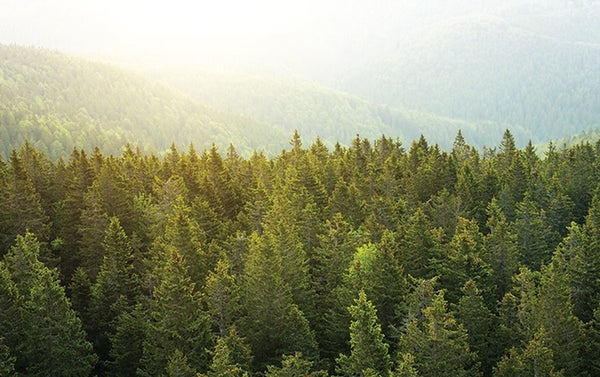
We humans have left our mark on the entire planet; not a single ecosystem remains completely untouched. But some landscapes have been affected less than others. And the extent to which the earth can provide habitats for plants and animals, sequester atmospheric carbon and regulate the flow of freshwater depends on the vastness of the least affected regions. These tracts, where human influence is still too weak to easily detect by satellite, are prime targets for conservation. Using satellite imagery, a group of researchers mapped the global decline between 2000 and 2013 of such “intact forest landscapes” (IFLs), defined as forested or naturally treeless ecosystems of 500 square kilometers or more. Around half of the area of the world's IFLs are in the tropics, and a third can be found in the boreal forests of North America and Eurasia. Logging, agriculture, mining and wildfires contributed to the drop, as reported in January in Science Advances.

The bright side? Landscapes under formal protection, such as national parks, were more likely to remain intact.

By the Numbers


On supporting science journalism

If you're enjoying this article, consider supporting our award-winning journalism by subscribing. By purchasing a subscription you are helping to ensure the future of impactful stories about the discoveries and ideas shaping our world today.


12.8 million

square kilometers Global extent of IFLs in 2000, a total area equivalent to a third of the surface of the moon.

Nearly 1 million

square kilometers Approximate area of IFLs lost between 2000 and 2013, about the size of Egypt.

65

Number of countries that were home to at least one IFL in 2000.

19

Number of countries that will be completely devoid of IFLs in 60 years if losses continue at the current rate.

Source: “The Last Frontiers of Wilderness: Tracking Loss of Intact Forest Landscapes from 2000 to 2013,” by Peter Potapov, in Science Advances, Vol. 3, No. 1, Article No. E1600821; January 4, 2017

Jason G. Goldman is a science journalist based in Los Angeles. He has written about animal behavior, wildlife biology, conservation, and ecology for Scientific American, Los Angeles magazine, the Washington Post, the Guardian, the BBC, Conservation magazine, and elsewhere. He contributes to Scientific American's "60-Second Science" podcast, and is co-editor of Science Blogging: The Essential Guide (Yale University Press). He enjoys sharing his wildlife knowledge on television and on the radio, and often speaks to the public about wildlife and science communication.

More by Jason G. Goldman
Scientific American Magazine Vol 317 Issue 1This article was published with the title “Waning Woods” in Scientific American Magazine Vol. 317 No. 1 (), p. 18
doi:10.1038/scientificamerican0717-18

It’s Time to Stand Up for Science

If you enjoyed this article, I’d like to ask for your support. Scientific American has served as an advocate for science and industry for 180 years, and right now may be the most critical moment in that two-century history.

I’ve been a Scientific American subscriber since I was 12 years old, and it helped shape the way I look at the world. SciAm always educates and delights me, and inspires a sense of awe for our vast, beautiful universe. I hope it does that for you, too.

If you subscribe to Scientific American, you help ensure that our coverage is centered on meaningful research and discovery; that we have the resources to report on the decisions that threaten labs across the U.S.; and that we support both budding and working scientists at a time when the value of science itself too often goes unrecognized.

In return, you get essential news, captivating podcasts, brilliant infographics, can't-miss newsletters, must-watch videos, challenging games, and the science world's best writing and reporting. You can even gift someone a subscription.

There has never been a more important time for us to stand up and show why science matters. I hope you’ll support us in that mission.

Thank you,

David M. Ewalt, Editor in Chief, Scientific American

Subscribe