
By Kate Kelland
A little-known bacterial disease may be killing as many people worldwide as measles, scientists said on Monday, while a mosquito-borne virus known as Zika is also raising global alarm.
The spread of Ebola in West Africa last year shows how poorly-understood diseases can emerge and grow rapidly while researchers race to design and conduct the scientific studies needed to combat them.
On supporting science journalism
If you're enjoying this article, consider supporting our award-winning journalism by subscribing. By purchasing a subscription you are helping to ensure the future of impactful stories about the discoveries and ideas shaping our world today.
Researchers in the journal Nature Microbiology called for a bacterial infection called meliodosis, which is resistant to a wide range of antibiotics, to be given a higher priority by international health organizations and policy makers.
At the same time, scientists at Britain's Oxford University warned that a virus known as Zika, which is carried by mosquitoes and has caused a major outbreak in Brazil, has "the potential of rapid spread to new areas".
Zika was first detected in Africa in the 1940s and was unknown in the Americas until last year, but has now been confirmed in Brazil, Panama, Venezuela, El Salvador, Mexico, Suriname, the Dominican Republic, Colombia, Guatemala and Paraguay, according to public health officials.
It is carried by the Aedes aegypti mosquito, which thrives in tropical climates and can also carry other diseases such as yellow fever, dengue fever and chikungunya.
Thousands of people in Brazil have been infected by Zika. While the virus is not thought to kill, health authorities there last year linked it to a surge in babies born with microcephaly, restricted head growth that seriously limits a child's mental and physical abilities.
Trudie Lang, professor of Global Health Research at Oxford University, said Zika - for which there are currently no known treatments - was a cause for concern.
"It's definitely becoming an issue, but there is so little research that we just don't know the size of the potential threat," she told Reuters.
She urged the international research community to act now to learn more about the virus, about how it is spread, and about how scientists might develop a treatment or vaccine against it.
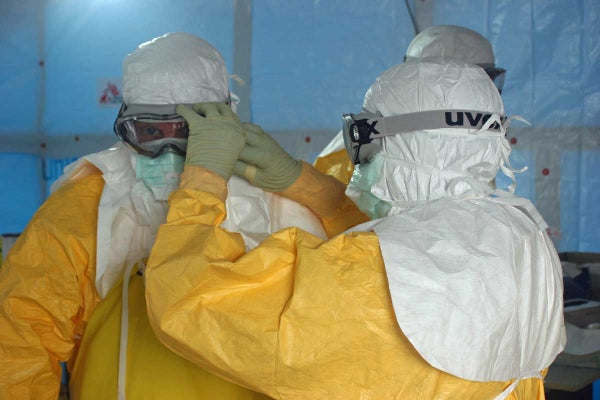
"We need to learn from what happened with Ebola," Lang said, referring to the devastating epidemic of that viral fever that swept through three countries in West Africa last year and caused more than 28,600 cases globally.
The vast majority of Ebola cases and deaths were in Guinea, Liberia and Sierra Leone, where more than 11,000 people were killed, according to data from the World Health Organization.
"We need to galvanize the research community now and move as quickly as we can from doing observational work (on Zika) to carrying out proper scientific research," Lang said.
In the Nature study on melioidosis, scientists said the bacteria that causes it, Burkholderia pseudomallei, is commonly found in soils in Southeast Asia and Northern Australia, but can be spread to non-endemic areas via imports of infected animals.
"Melioidosis is a great mimicker of other diseases and you need a good microbiology laboratory for bacterial culture and identification to make an accurate diagnosis," said Direk Limmathurotsakul, a microbiologist and assistant professor at Thailand's Mahidol University, who co-led the study.
"It especially affects the rural poor in the tropics, who often do not have access to microbiology labs, which means that it has been greatly under-estimated as an important public health problem across the world," he added.
The researchers estimate there are 165,000 melioidosis cases a year in people, of which 89,000 will be fatal. These tolls are similar to those caused by measles - a viral infection that can be prevented with a vaccine - and far greater than dengue fever.
The study found that the highest melioidosis risk zones are in South Asia, East Asia and the Pacific, including all countries in Southeast Asia and tropical Australia, sub-Saharan Africa and South America. There are also risk zones of varying sizes in Central America, southern Africa and the Middle East.