
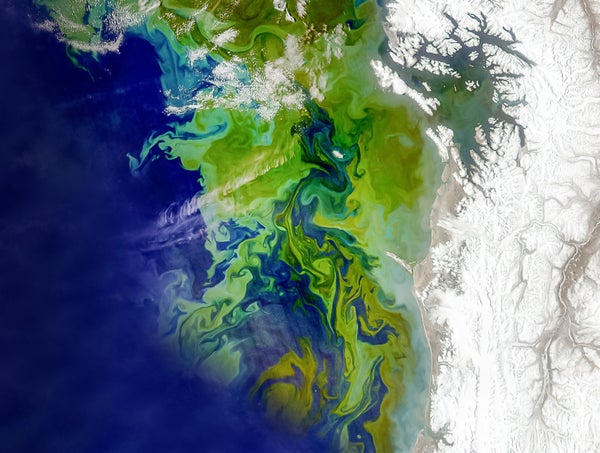
CLIMATEWIRE | Algal blooms are growing bigger and more frequent worldwide as ocean temperatures rise and circulation patterns change.
Climate change is likely one cause of the alterations, which favor the growth of phytoplankton, according to a new study published in Nature.
Whether it's good or bad is a murky question. Algae are an important food source for many marine animals, and large blooms can sometimes be a benefit for ocean ecosystems and fisheries.
On supporting science journalism
If you're enjoying this article, consider supporting our award-winning journalism by subscribing. By purchasing a subscription you are helping to ensure the future of impactful stories about the discoveries and ideas shaping our world today.
But some algal blooms also release toxins into the water and poison the environment. And when blooms die off and begin to decompose, they can reduce the oxygen concentrations in the water, harming the ecosystem.
Because of the potential for both positive and negative outcomes, experts keep a close eye on algal blooms around the world.
The new study uses satellite data to track algal blooms all over the globe between 2003 and 2020. The researchers focused on 153 coastal countries and 54 large marine ecosystems.
During the study period, algal blooms increased in size by about 13 percent, or 1.5 million additional square miles. And they increased in frequency by 59 percent.
The trends were different from one region to another. Europe and North America saw the largest blooms, while Africa and South America experienced the most frequent blooms.
The biggest increases in frequency over time occurred in major coastal current systems, including the Oyashio Current in the western North Pacific, the Alaska Current, the Malvinas Current off the coast of Patagonia, the Canary Current, the Benguela Current around the coast of southern Africa, and the Gulf Stream.
Some places actually saw algal blooms weaken over time, including the California Current, parts of the northeastern North Atlantic and the Okhotsk Sea in the North Pacific.
Just as the trends differed from one place to another, the causes likely varied as well. The researchers examined a number of factors that can contribute to algae blooms, including ocean temperatures, ocean circulation patterns, and runoff from fertilizer and other nutrients.
Rising water temperatures likely played a role in some parts of the world, particularly high-latitude regions like the Alaska Current and the Oyashio Current.
Climate change has also likely had a hand in altering the flow of ocean currents. These shifting circulation patterns can change the way nutrients flow and mix in the water, which can cause an increase in blooms in certain regions and a decrease in others.
These kinds of shifts may have played a role in declining algal blooms in the California Current, while increasing them in places like the Canary and Benguela currents, the researchers suggest.
Meanwhile, algal blooms in some regions didn’t appear to have clear links to changes in ocean temperatures or circulation patterns.
Declines in the Arabian Sea or increases around China, for instance, could be the product of changing patterns of fertilizer use. Intensifying aquaculture in places like Finland, China, Algeria, Argentina and Russia could also be helping to intensify algae blooms in those regions, the researchers suggest.
Reprinted from E&E News with permission from POLITICO, LLC. Copyright 2023. E&E News provides essential news for energy and environment professionals.