An Open Book

Spencer Heyfron

Join Our Community of Science Lovers!

Generally speaking, psychology holds that five major factors, or traits, shape our personalities: openness to experience, conscientiousness (facility with planning ahead), extraversion (being sociable), agreeableness (including being considerate of others) and neuroticism (subject to worry). Each of these “big five” has half a dozen dimensions. If you’re like me, you probably enjoy taking those free online tests to see where you fall on each.

It’s perhaps immediately obvious that our personalities shape our responses to things that happen to us. Someone who is agreeable is going to make an effort when a surprise visitor pops by, for instance. But variations in our personality traits may also mean we may actually experience the world differently than others do.

Consider being “open-minded.” In an experiment, Luke Smillie, a psychologist who is director of the Personality Processes Lab at the University of Melbourne in Australia, and his colleagues found that people who score higher on that character trait “may literally see the world differently from the average person.” Their brains let in information that others filter out, helping to drive creative responses. Find out more here about the study in Smillie’s feature article, “Openness to Experience: The Gates of the Mind.”


On supporting science journalism

If you're enjoying this article, consider supporting our award-winning journalism by subscribing. By purchasing a subscription you are helping to ensure the future of impactful stories about the discoveries and ideas shaping our world today.


More new ideas await in this issue:about “How Poverty Affects the Brain,” the ways “Eyewitness Memory Is a Lot More Reliable Than You Think,” and which 22 genes are associated with “Intelligence and the DNA Revolution.” All you need to do is keep an open mind.

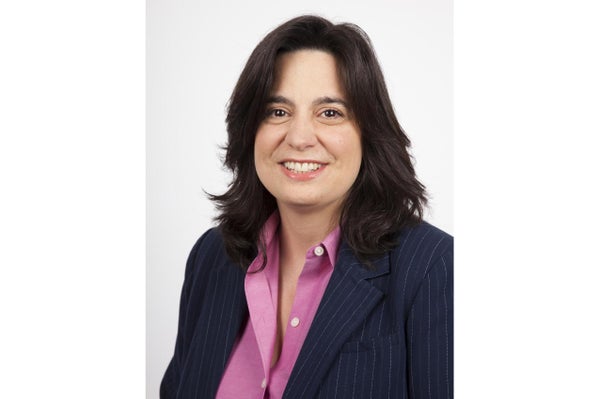
Mariette DiChristina, Steering Group chair, is dean and professor of the practice in journalism at the Boston University College of Communication. She was formerly editor in chief of Scientific American and executive vice president, Magazines, for Springer Nature.

More by Mariette DiChristina
SA Mind Vol 28 Issue 6This article was published with the title “An Open Book” in SA Mind Vol. 28 No. 6 (), p. 2
doi:10.1038/scientificamericanmind1117-2

It’s Time to Stand Up for Science

If you enjoyed this article, I’d like to ask for your support. Scientific American has served as an advocate for science and industry for 180 years, and right now may be the most critical moment in that two-century history.

I’ve been a Scientific American subscriber since I was 12 years old, and it helped shape the way I look at the world. SciAm always educates and delights me, and inspires a sense of awe for our vast, beautiful universe. I hope it does that for you, too.

If you subscribe to Scientific American, you help ensure that our coverage is centered on meaningful research and discovery; that we have the resources to report on the decisions that threaten labs across the U.S.; and that we support both budding and working scientists at a time when the value of science itself too often goes unrecognized.

In return, you get essential news, captivating podcasts, brilliant infographics, can't-miss newsletters, must-watch videos, challenging games, and the science world's best writing and reporting. You can even gift someone a subscription.

There has never been a more important time for us to stand up and show why science matters. I hope you’ll support us in that mission.

Thank you,

David M. Ewalt, Editor in Chief, Scientific American

Subscribe