
The universe in which the classic PBS series Cosmos debuted 40 years ago no longer really exists. In 1980 the Internet was in its infancy, scientists were just starting to sound the alarm about global warming, and present-day scientific realities such as exoplanets, dark energy and the Higgs boson remained entirely theoretical. Co-created by its host, the late astronomer Carl Sagan, with his wife Ann Druyan and their collaborator Steven Soter, the series’ clear-eyed view of the past, present and future of life in the universe has been clouded over by the passage of time.
Today, however, Sagan’s brainchild is in the midst of a modern reimagining that began in 2014 with Druyan as an executive producer, writer and director and with astrophysicist Neil deGrasse Tyson as host. This revival begins its third season, Possible Worlds, in March; an accompanying book by Druyan comes out in February. Scientific American spoke with her about Cosmos, science communication and her vision of a world made better and more beautiful through rational inquiry.
What can we expect from this latest installment of Cosmos?
On supporting science journalism
If you're enjoying this article, consider supporting our award-winning journalism by subscribing. By purchasing a subscription you are helping to ensure the future of impactful stories about the discoveries and ideas shaping our world today.
This new season contains a hopeful vision of the future and is a meditation on a remarkable quote from Einstein, from when he opened the 1939 New York World’s Fair. I will paraphrase, but he was saying [that] science will not fulfill its mission the way art has until its inner meaning penetrates into the consciousness of the people. When I saw that quote, I recognized this was the original mission of Cosmos: to bring that inner meaning to everyone.
This season is in the shadow of climate change. I feel like I’m a member of a civilization that cannot awaken to the challenges that threaten to destroy it. One of the ways to awaken [people] is to give a dream of what the future could be if we use our science and technology with wisdom and foresight and begin to think in the timescales of science. Not the next balance sheet, the next quarter, the next election, but 1,000 years from now. What will it be like?
What does it mean to use science that way?
For me, science is one of those rare occasions for human self-esteem, precisely because [science] is a kind of mechanism that says, “We’re human, and we’re going to deceive ourselves and each other. So let’s create a system where no matter how much we may want to believe something, if it’s not true, we’ll come to know that over time.” ... What happiness, what self-respect can we have unless we face reality and embrace it?
What “possible worlds” will Cosmos explore?
We go to lost worlds from our own history. Like the great city of Mohenjo Daro (in what is now Pakistan), which thousands of years ago had indoor plumbing and a glorious civilization—we bring that back to life. We go to the possible worlds on exoplanets, of course, but also to the planets of our own solar system.
We also explore inner worlds. For instance, we’re fascinated by the concept of the “connectome” of the human brain—the idea that just as we’ve mapped the human genome, we could map all the thoughts, associations, memories and ideas of a single human. Imagine putting that on an interstellar probe!
And we go to worlds right beneath our feet, looking more deeply at the ways other life-forms on this planet communicate. Like the democratic society of the bees, in which consensus arrives through waggle dancing. Here we are, thinking about messages from other extraterrestrial civilizations, when we are living in the midst of another society that communicates in symbolic language.
What is your dream for the future?
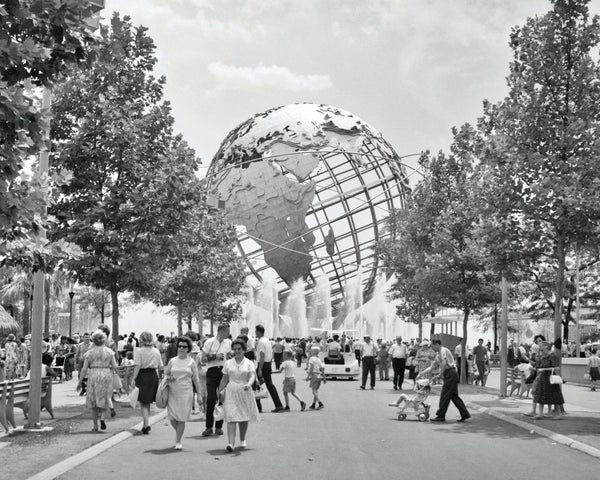
I have a theory that dreams are maps. And [today] we don’t have a dream of a great future. I wanted to create a believable dream of the future [with] episode 13 of Cosmos, in which we go to the 1939 World’s Fair, with its art deco sepia gorgeousness, and then to the 1964 World’s Fair with its Kodachrome futuristic optimism, and then to the 2039 World’s Fair. And what I’m most proud of is a new colossus in New York Harbor that consists of the carbon dioxide redeemed from the atmosphere that has been turned into calcium carbonate—limestone. Like a Statue of Liberty except it’s the Tree of Life, with all the different species of biology.
That’s my dream: that human ambition will be directed to making this planet, and the astonishing diversity of life that it supports, our priority. That’s the possible world that ultimately all of Cosmos is driving to.