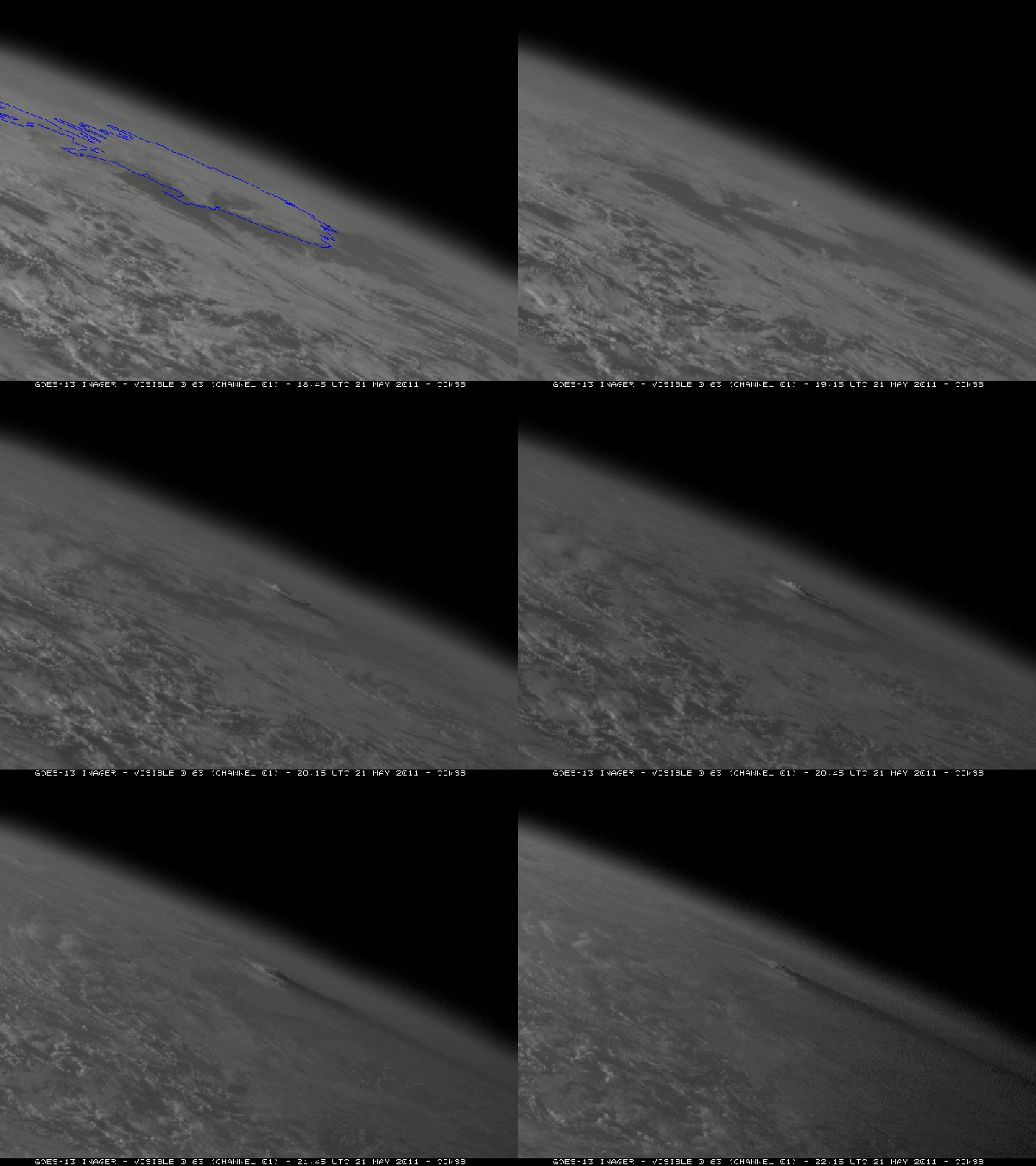
At least this one is easier for non-Icelandic speakers to pronounce. A year after the Eyjafjallajökull eruption paralyzed air travel in much of Europe, another Icelandic volcano blew its top.
Image courtesy of Cooperative Institute for Meteorological Satellite Studies
Join Our Community of Science Lovers!
On supporting science journalism
If you're enjoying this article, consider supporting our award-winning journalism by subscribing. By purchasing a subscription you are helping to ensure the future of impactful stories about the discoveries and ideas shaping our world today.
At least this one is easier for non-Icelandic speakers to pronounce. A year after the Eyjafjallajökull eruption paralyzed air travel in much of Europe, another Icelandic volcano blew its top. Grimsvötn in southeastern Iceland began erupting May 21, spewing ash plumes as high as 12 to 17 kilometers into the stratosphere. The U.S. GOES 13 satellite captured these images at the start of the eruption. The series was taken every 30 minutes over a three-and-a-half-hour period; Iceland is indicated by the blue outline.
By May 25, the eruption of ash and sulfur dioxide had ceased and the volcano was releasing only steam. Satellite tracking showed sulfur dioxide being carried northeasterly over the Arctic Ocean as ash plumes spread to the southeast.
Although the Grimsvötn eruption was larger than Eyjafjallajökull's, there was far less impact on air travel. Much of the initial wet ash had fallen to the ground near Iceland, and the suspended ash plumes were high enough to allow flights at lower altitudes. Between May 23 and May 25 about 900 of 90,000 scheduled lights across Europe were canceled due to volcanic ash.
—Nina Bai
It’s Time to Stand Up for Science
If you enjoyed this article, I’d like to ask for your support. Scientific American has served as an advocate for science and industry for 180 years, and right now may be the most critical moment in that two-century history.
SciAm always educates and delights me, and inspires a sense of awe for our vast, beautiful universe. I hope it does that for you, too.
If you subscribe to Scientific American, you help ensure that our coverage is centered on meaningful research and discovery; that we have the resources to report on the decisions that threaten labs across the U.S.; and that we support both budding and working scientists at a time when the value of science itself too often goes unrecognized.