
It’s official: Antarctic sea ice hit its annual winter maximum on Sept. 22, reaching a record area of 7.76 million square miles, the National Snow and Ice Data Center (NSIDC) announced Tuesday.
That maximum extent was 595,000 square miles above the 1981-2010 average extent, the NSIDC said in a statement, and broke the consecutive records set in 2012 and 2013.
The record had been expected and follows a trend over the last three years of anomalously high winter ice extents around the southernmost continent — a trend that provides a stark contrast to the inexorable decline of Arctic sea ice, which it’s sixth lowest summer extent on record last month. (Seasons in the Northern and Southern Hemispheres run opposite each other.)
On supporting science journalism
If you're enjoying this article, consider supporting our award-winning journalism by subscribing. By purchasing a subscription you are helping to ensure the future of impactful stories about the discoveries and ideas shaping our world today.
The growth of Antarctic sea ice in the winter exhibits more short-term ups and downs (seen as wiggles on the graphs charting the growth) than Arctic sea ice does, and so the Antarctic maximum takes longer to emerge from the noise. Scientists have to wait until they see a clear downward trend before declaring the official maximum.
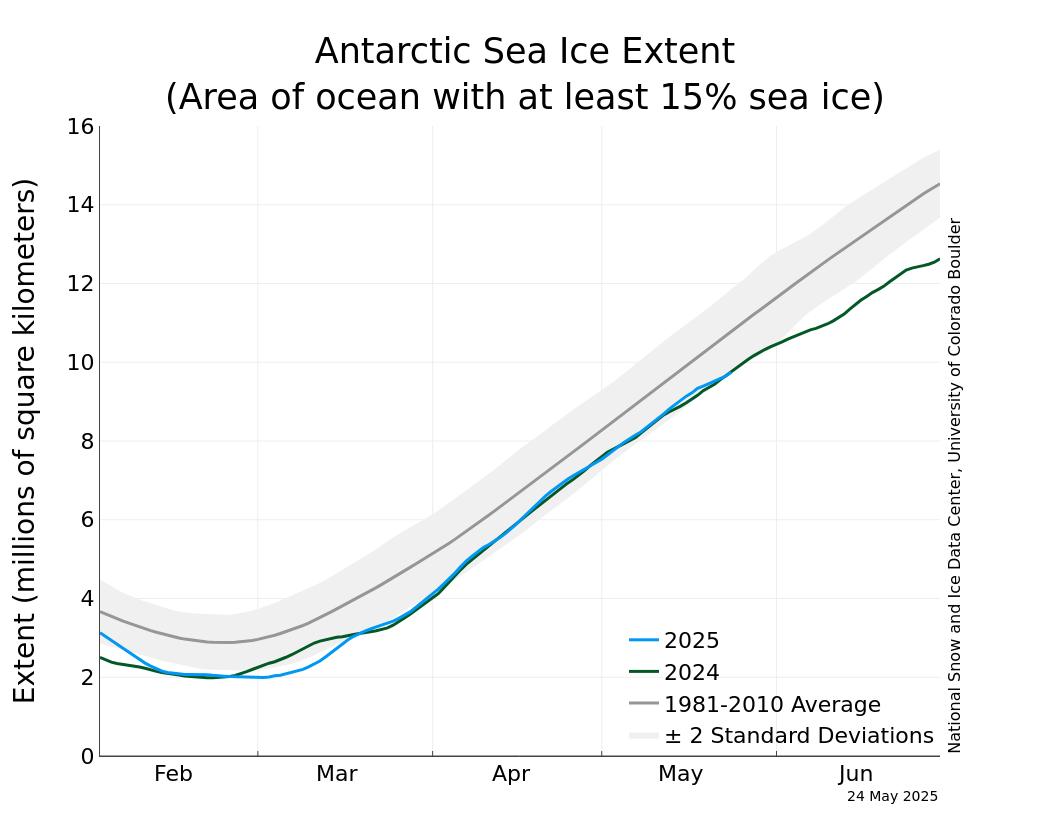
This year wasn’t just notable for the final maximum extent, though, as “nearly every day has been a record for that day in the satellite record” this year, Ted Scambos, a senior scientist with NSIDC, previously told Climate Central.
While the melting of Arctic sea ice — which on the whole has declined by 4.52 percent per decade, according to the NSIDC — has a very clear connection to global warming, the forces behind the growth of Antarctic ice are murkier, and scientists like Scambos are still teasing them out.
The two main contenders are shifting winds around the Antarctic continent (possibly linked to the ozone hole or the warming of the continent), which could be smearing the sea ice out over a larger area, and a pool of fresher water around the continent resulting from the melting of continental glaciers. That fresher water may provide a more stable environment for sea ice to grow in, Scambos said.
Which factor is the dominant one behind the sea ice growth of recent years could affect whether the record growth continues, Scambos said. If the melt of ice-bound land is the main driving force, then “the trend is not going to go away very easily,” he said, as more of that ice is bound to melt as the world warms.
You May Also Like: Drought Dries Up California Hydropower Oceans Getting Hotter Than Anybody Realized Climate Fueled Some of 2013’s Most Extreme Events Arctic Sea Ice to Reach Sixth Lowest Extent on Record
This article is reproduced with permission from Climate Central. The article was first published on October 7, 2014.